

Battery Slurry
TEL:18925129293
High‑Precision Adhesive Bonding Solution for New‑Energy Vehicle Battery Encapsulation
日期:2023-05-31作者:小诺High‑Precision Adhesive Bonding Solution for New‑Energy Vehicle Battery Encapsulation
With the explosive growth of the new‑energy vehicle market, battery encapsulation has become a core process determining vehicle safety, driving range and service life. Under new technology trends including 800V high‑voltage platforms and CTC (Cell‑to‑Chassis) integration, stirring and defoaming of battery encapsulation adhesives are facing unprecedented challenges. Leveraging self‑developed vacuum stirring‑defoaming technology, SIENOX controls the full adhesive processing workflow with nano‑level precision and delivers closed‑loop solutions covering materials to manufacturing.
Working Condition Requirements
• Material Types: Adhesives for new‑energy vehicle battery encapsulation (battery structural adhesives, thermal‑conductive structural adhesives, sealants, polyurethane adhesives, silicone potting adhesives, epoxy structural adhesives, acrylate adhesives, etc.)
• Initial Status: Large quantities of bubbles are introduced during mixing and preparation of battery encapsulation adhesives. High‑viscosity systems (up to 80000 cps) feature poor fluidity; bubbles are trapped inside the colloid and hardly escape naturally. Uneven filler dispersion degrades bonding strength and thermal‑conductive performance.
• Processing Target: Thoroughly remove bubbles from battery encapsulation adhesives and achieve uniform dispersion of nano‑scale fillers. Ensure uniform, dense and bubble‑free adhesive layers with adhesive‑layer thickness accuracy of ±0.005 mm and air‑tightness pass rate above 99.9 %, satisfying stringent requirements for advanced encapsulation processes such as 800V high‑voltage platforms and CTC cell‑to‑chassis integration.
Comparison Before and After Improvement
Before Improvement — Pain Points of Traditional Processes:
• Air‑tightness failure caused by bubbles: Residual bubbles inside adhesive layers form micro‑channels. Moisture and dust penetrate into battery packs along bubble paths, resulting in failed IP67 waterproof tests and severe safety risks.
• Uneven filler dispersion: Conventional stirring fails to uniformly distribute reinforcing materials such as carbon fiber and nano‑silver, lowering energy‑absorption efficiency of structural adhesives in crash tests and failing to meet international safety standards including UN38.3.
• Large adhesive‑layer thickness deviation: Bubble‑containing adhesives are coated with uneven thickness; traditional processes bring thickness deviation up to ±0.03 mm and trigger risks of air‑tightness failure.
• Unstable thermal‑conductive performance: Bubbles inside thermal‑conductive structural adhesives create thermal resistance, causing uneven heat dissipation of battery packs and impairing battery service life and safety.
• Poor mass‑production consistency: Traditional defoaming consumes long time with large batch‑to‑batch variations and cannot cooperate efficiently with automatic production lines and MES systems.
• Insufficient bonding strength: Bubbles induce local strength reduction of adhesive layers, raising risks of adhesive debonding under vibration and shock conditions.

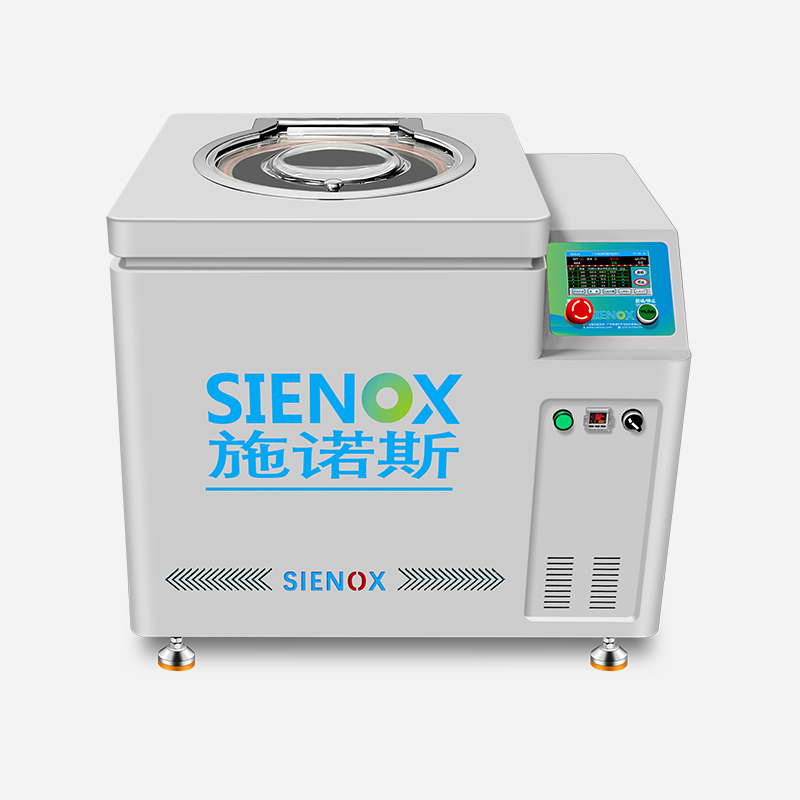
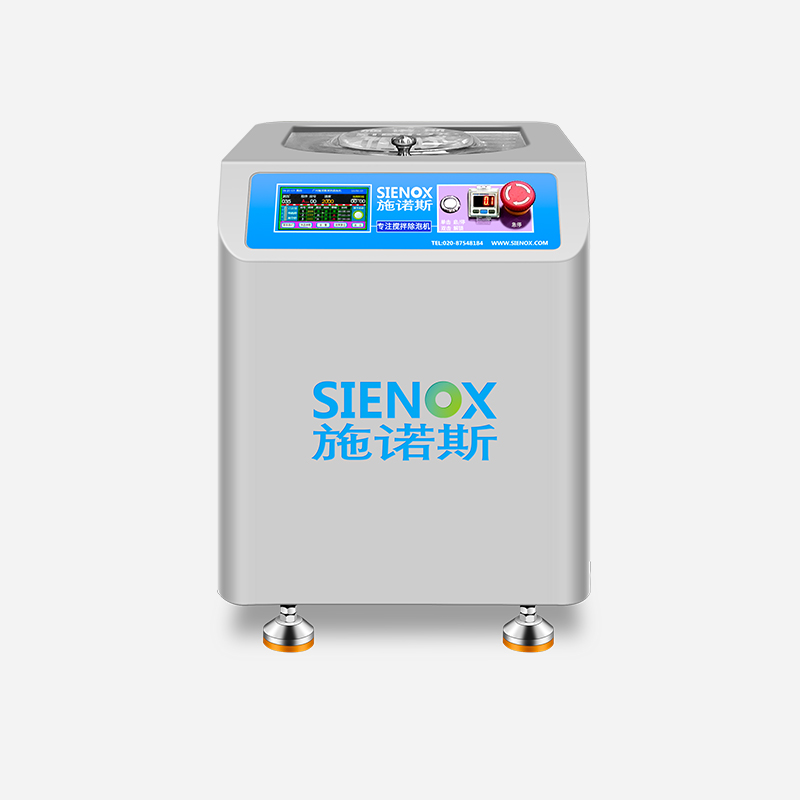
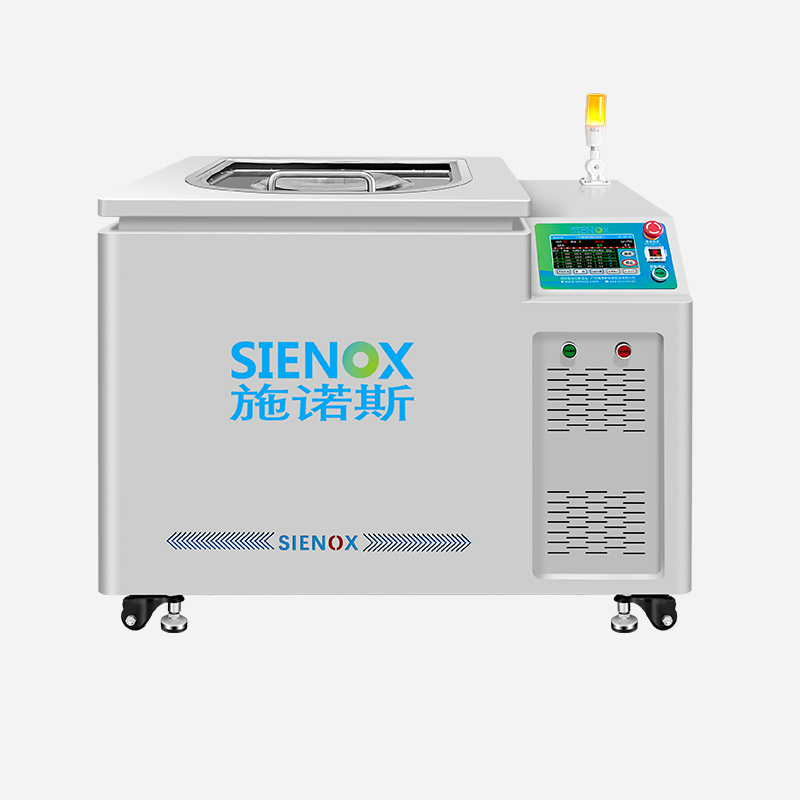
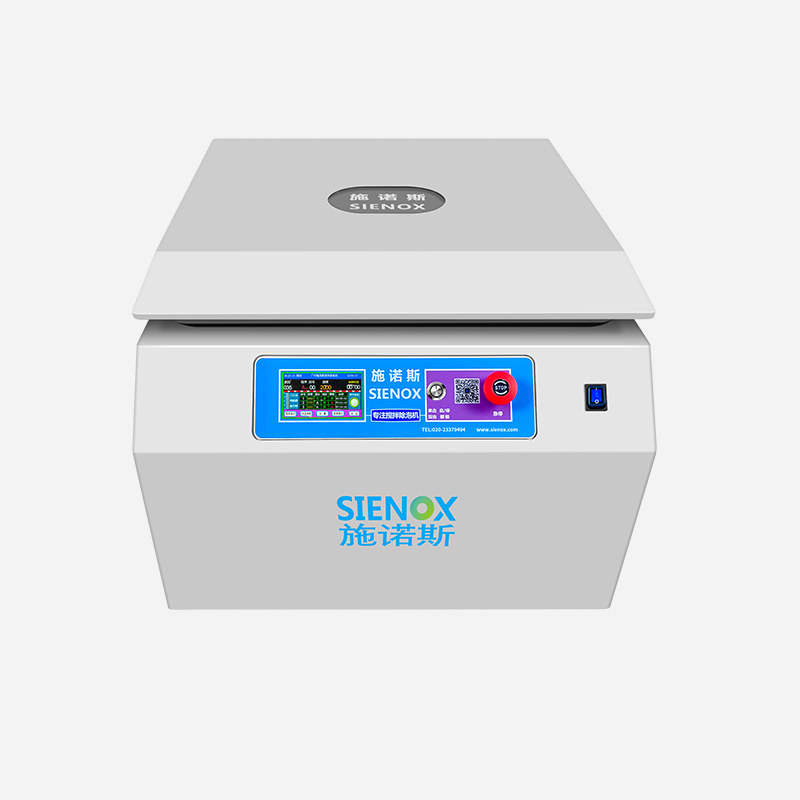
Solution — SIENOX SIE‑MIX90 Planetary Vacuum Stirring‑Defoaming Machine:
With the combined effect of “vacuum negative pressure + dynamic stirring”, closed‑loop solutions from materials to manufacturing are provided for the industry:
1. Nano‑scale filler dispersion technology: The planetary dynamic stirring system achieves 99.7 % uniform dispersion of reinforcing materials such as carbon fiber and nano‑silver, greatly improving energy‑absorption efficiency of structural adhesives in crash tests and complying with international safety standards including UN38.3.
2. Ultra‑fast defoaming within 90 seconds: For high‑viscosity epoxy adhesives up to 80000 cps for battery encapsulation, gas content is controlled below 0.01 % to eliminate micro‑leakage of battery packs.
3. ±0.005 mm adhesive‑layer control: Adaptive temperature‑control modules compensate for material thermal expansion and contraction, delivering air‑tightness pass rate above 99.9 % for extra‑long cell encapsulation.
4. Full‑link smart‑manufacturing integration: Key parameters such as adhesive viscosity and temperature are monitored in real‑time for traceability of each batch, enabling seamless connection with automatic production lines.
5. Precise multi‑segment stirring control: Synchronized revolution‑and‑rotation technology adapts to stirring requirements for adhesives of different viscosities and guarantees filler‑dispersion uniformity.
Sample Provider: New‑energy‑vehicle battery‑encapsulation manufacturer
Test Conditions
Item | Parameter |
Test Model | SIE‑MIX90 Planetary Vacuum Stirring‑Defoaming Machine |
Test Material | Structural adhesive for battery encapsulation (80000‑cps high‑viscosity epoxy adhesive) |
Rotating Speed | 1800 rpm |
Time | 4 min |
Vacuum Degree | -95 KPa |
Stirring‑Defoaming Effect Comparison
Comparison Dimension | Before Stirring‑Defoaming | After Stirring‑Defoaming |
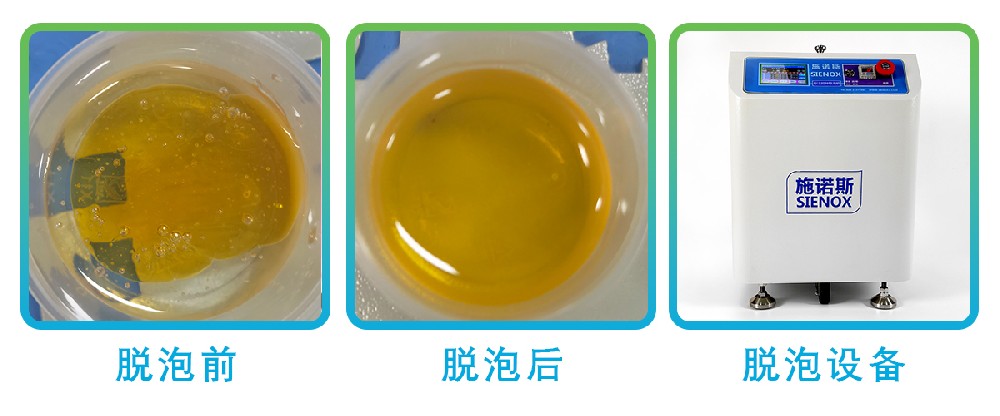
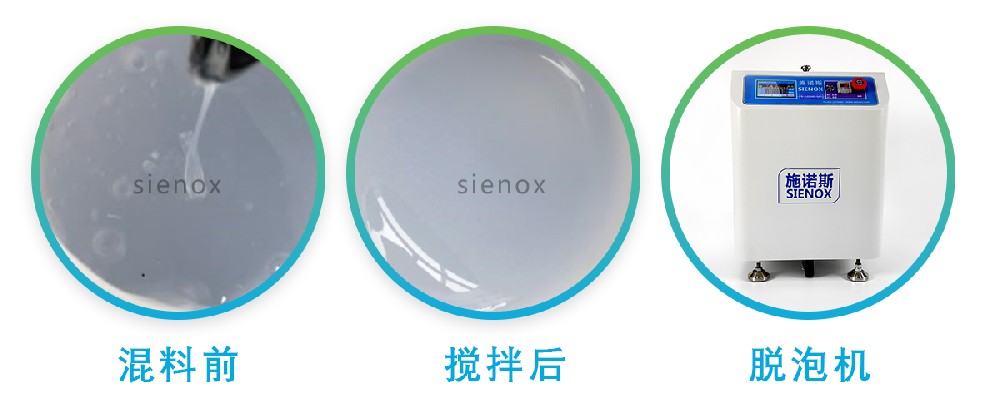
Bubble Content | Massive bubbles, non‑uniform colloid | Gas content ≤0.01 %, nano‑scale bubbles thoroughly removed |
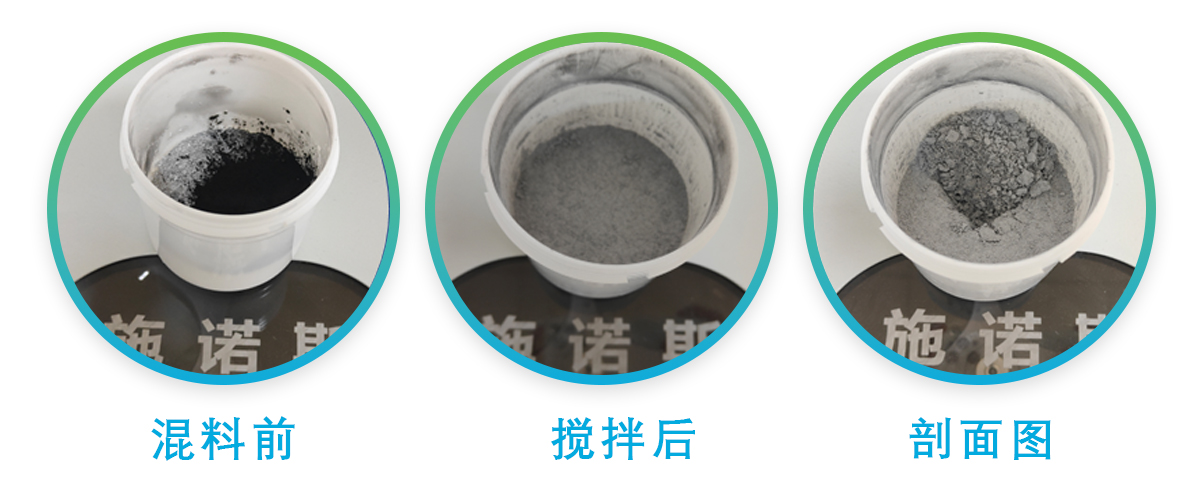
Filler Dispersion | Filler agglomeration, poor dispersion | 99.7 % uniform dispersion, good batch‑to‑batch consistency |
Adhesive‑Layer Thickness | Deviation ±0.03 mm, uneven thickness | Deviation controlled within ±0.005 mm |
Air‑tightness | Bubbles form micro‑channels, failed IP67 test | Air‑tightness pass rate above 99.9 %, verified by 100 000 cycles of IP67 waterproof test |
Thermal‑conductive Performance | Bubbles create thermal resistance, low thermal conductivity | Dense structure with greatly improved thermal conductivity |
Bonding Strength | Uneven strength caused by local bubbles | Uniform and dense adhesive layer, stable and reliable bonding strength |
Industry Application Cases
Case 1: Encapsulation of Extra‑long LFP Battery Cells
For the extra‑long blade‑battery project, SIENOX delivered customized gradient defoaming solutions. Adhesive‑layer‑thickness fluctuation was reduced from ±0.03 mm to ±0.005 mm. Battery‑pack energy density was raised by 7 %, and 100 000 cycles of IP67 waterproof‑test verification were passed.
Case 2: Full‑sealing Preparation of Solid‑state Batteries
Stirring and defoaming of nano‑silver adhesive were completed in an ultra‑clean environment. The interfacial impedance of solid‑state batteries was reduced by 30 %, and fast‑charging cycle life exceeded 2000 cycles.
Mature Application Fields
• Battery structural adhesives (battery‑module bonding, cell fixation, battery‑pack sealing)
• Thermal‑conductive structural adhesives (battery heat dissipation, thermal‑pad adhesives, thermal‑conductive potting adhesives)
• Sealants (battery‑pack waterproof sealing, interface sealing, wire harness sealing)
• Polyurethane adhesives (battery‑pack structural bonding, elastomer potting)
• Silicone potting adhesives (battery‑module potting, electronic‑component protection)
• Epoxy structural adhesives (battery‑structural‑part bonding, high‑strength encapsulation)
• Acrylate adhesives (battery fast‑positioning adhesives, temporary‑fixation adhesives)
• New‑energy‑battery encapsulation adhesives (800V high‑voltage batteries, CTC cell‑to‑chassis batteries)