


UV Adhesive

TEL:18925129293


UV Adhesive Bubbles Solved in One Go! Field-Tested Defoaming Solution
日期:2023-06-01作者:SIENOXUV Adhesive Defoaming Solution
One-stop solution for UV adhesive bubble issues from material characteristics to process parameters
UV Curable Adhesive is a functional adhesive material based on acrylate, epoxy acrylate, polyurethane acrylate and other matrices with added photoinitiators, which can achieve second-level curing under ultraviolet irradiation (365~405nm). Its core advantages include fast curing, no heating required and low VOC emissions. It is widely used in high-demanding industries such as optics, electronics, medical treatment and automotive. UV adhesives feature a wide viscosity range and prone photoinitiator sedimentation with special coating processes. Air bubbles are easily entrapped during production and application. Residual bubbles not only reduce optical transparency, but also lead to incomplete curing and bonding failure. SIENOX provides complete defoaming solutions from material selection to process for various UV adhesives via self-developed planetary mixing and defoaming technology.
◆ Material Characteristics
Common Matrix Types Acrylate, Epoxy Acrylate, Polyurethane Acrylate | Photoinitiator System TPO, 184, 651, 819, ITX, etc. | Curing Method UV curing (365~405nm) |
Common Viscosity Range 200~30,000 cps | Curing Speed Several seconds to tens of seconds (depends on light intensity and coating thickness) | Typical Application Scenarios Optical lenses, LCD panels, camera modules, wafer-level packaging |
◆ Mature Application Fields
UV adhesives are widely adopted in high-demand industries including optics, electronics and medical devices. Main application fields and typical working conditions are listed below:
🔍 Optical Lens Bonding Bonding of optical components for camera lenses and microscope objectives, requiring high light transmittance (≥95%), low yellowing and zero residual bubbles | 📱 LCD/OLED Display Modules OCA optical lamination between touch panel and display panel, requiring high transparency, bubble-free performance and resistance to humidity-heat aging | 📷 Camera Module Packaging Bonding and fixation of Lens and VCM motors for mobile/vehicle cameras, featuring low shrinkage, high-precision positioning and shadowless adhesive curing |
💎 Wafer-Level Optical Packaging Packaging and bonding for WLO wafer-level lenses and DOE diffractive optical elements, requiring nano-scale flatness and ultra-low bubble rate | 🏥 Medical Device Assembly Transparent component bonding for disposable medical consumables and in-vitro diagnostic equipment, requiring biocompatibility and bubble-free transparency | 🔬 Optical Fiber Component Bonding Alignment bonding of low-refractive-index UV adhesive for optical fiber couplers, optical waveguides and gratings, featuring low shrinkage and high positioning accuracy |
🚗 Automotive Electronics Packaging UV adhesive fixation for vehicle-mounted sensors, HUD head-up displays and lidar optical parts, requiring high temperature resistance and vibration resistance | 🎧 Consumer Electronics Assembly Fast bonding of optical and structural parts for TWS earbuds, smartwatches and AR/VR devices, requiring second-level positioning and flawless appearance | 💡 Glass & Transparent Material Bonding Transparent bonding for display cabinets, furniture, architectural glass and acrylic products, featuring high light transmittance, anti-yellowing and good weather resistance |
◆ Core Problems Caused by Bubbles
🔍 Degraded Optical Performance Bubbles form scattering points and abnormal refraction in the light path, reducing light transmittance and raising haze. Visible defects occur on optical lenses and display modules, directly downgrading product grade. | 💔 Insufficient Bonding Strength Bubbles occupy effective bonding area and create stress concentration points, lowering shear strength and peel strength. Debonding failure easily occurs under vibration and temperature cycling. |
⚡ Incomplete Curing Bubbles block UV light transmission. Photoinitiators in shaded areas cannot be fully excited, leading to incomplete curing and sticky surfaces in deep or thick coatings. | 🎨 Appearance Defects After curing, bubbles form visible white dots or pits inside transparent adhesive layers, severely damaging product appearance, which is unacceptable for consumer electronics and optical products. |
◆ Recommended Process — Planetary Mixing & Defoaming
Planetary mixing and defoaming serves as the core process to eliminate bubbles in UV adhesives. Through planetary motion of rotation and revolution, efficient homogeneous mixing and defoaming are realized without impairing photoinitiator activity. UV adhesives are sensitive to ultraviolet light, so the whole process must be operated under yellow safety lights or light-shielded environments to prevent premature curing.
Step 1 Pre-mixing Fully mix to redistribute photoinitiators and functional monomers evenly and avoid filler sedimentation or photoinitiator delamination caused by standing | Step 2 Container Loading & Parameter Setting Select rotating speed according to viscosity (low viscosity:1000~1500rpm, medium viscosity:1500~2000rpm, high viscosity:2000~2500rpm) |
Step 3 Mixing & Defoaming Rotation and revolution run simultaneously. Vacuum assistance (-95KPa) can be added for medium and high viscosity materials to boost defoaming efficiency, with full light shielding during operation | Step 4 Discharging & Coating Apply the adhesive immediately after defoaming. Operation under light-shielded environment is recommended. Control coating thickness to ensure sufficient UV penetration for full curing |
◆ Recommended Equipment
MIX60 — Suitable for low-viscosity UV adhesives (viscosity ≤3,000 cps). For laboratory / small-batch scenarios. Planetary motion with revolution and rotation, simple operation, quick cleaning, optional vacuum module.
MIX90 — Suitable for medium-viscosity UV adhesives (3,000~10,000 cps). General-purpose model covering mainstream UV adhesives, balancing mixing and defoaming efficiency. Optional vacuum (-95KPa), ideal for small & medium batch production lines.
MIX1000PLUS — For high viscosity and high capacity, viscosity 10,000~30,000 cps. Production-grade mixing defoamer with large processing volume and outstanding efficiency for continuous industrial operation, equipped with standard vacuum module.
MIX2000 — For mass production and high-capacity requirements. Large-volume industrial defoamer with stable operation and simple maintenance, suitable for long continuous running, standard vacuum module.
◆ Test Cases
The following are field-tested defoaming cases of UV adhesives of different viscosity grades to verify the applicability of planetary mixing and defoaming process in various UV adhesive scenarios.
▶ Case 1: Low-viscosity Optical-Grade UV Adhesive
Item | Parameters |
Test Material | One-component optical-grade UV adhesive (acrylate matrix, high light transmittance type) |
Viscosity | Approx. 800 cps |
Test Model | MIX60 |
Vacuum Degree | -95 KPa |
Rotation Speed | 1,500 rpm |
Time | 2 min |
Temperature | Ambient Temperature (25℃) |
✅ Defoaming Result: Bubbles are completely removed. The adhesive remains transparent and clear without impurities. No attenuation in light transmittance test, good optical uniformity after coating, meeting optical-grade requirements.
▶ Case 2: Medium-viscosity UV Adhesive for Electronic Assembly
Item | Parameters |
Test Material | One-component UV adhesive for electronic assembly (epoxy acrylate matrix with a small amount of inorganic fillers) |
Viscosity | Approx. 5,000 cps |
Test Model | MIX90 |
Vacuum Degree | -95 KPa |
Rotation Speed | 2,000 rpm |
Time | 4 min |
Temperature | Ambient Temperature (25℃) |
✅ Defoaming Result: Bubbles are completely eliminated with uniformly dispersed fillers without agglomeration. The cured adhesive is dense and transparent, meeting bonding strength standards, suitable for precision bonding of camera modules and electronic components.
▶ Case 3: High-viscosity Thick-Coat UV Adhesive
Item | Parameters |
Test Material | High-viscosity UV structural adhesive (polyurethane acrylate matrix filled with high-content inorganic fillers for thick-coat potting) |
Viscosity | Approx. 18,000 cps |
Test Model | MIX1000PLUS |
Vacuum Degree | -95 KPa |
Rotation Speed | 2,000 rpm |
Time | 6 min |
Temperature | Ambient Temperature (25℃) |
✅ Defoaming Result: Bubble removal rate>98% for high-viscosity paste. The adhesive returns to dense and uniform state. Fillers are evenly distributed without agglomeration or delamination. No residual bubbles inside after thick coating curing with full curing, and bonding strength meets structural component requirements.
◆ Comparison Before & After Improvement
Comparison Item | Before Defoaming | After Defoaming |
Optical Transparency | Bubbles cause light scattering, lower transmittance and higher haze | Transmittance restored with good optical uniformity |
Bonding Reliability | Bubbles reduce effective bonding area and easily lead to debonding failure | Dense adhesive with significantly improved bonding strength |
Curing Completeness | Bubbles block UV light and result in incomplete deep curing | Uniform UV penetration for thorough curing without blind spots |
Appearance Quality | Surface bubble traces and pits damage product appearance | Smooth flat surface with qualified appearance |
Batch Consistency | Large fluctuation in bubble rate and unstable quality | Reproducible parameters and good batch consistency |
Production Efficiency | High rework rate and reduced yield caused by bubbles | Improved first-pass yield and greatly reduced rework rate |
🎯 Free Sample Testing
Send us your UV adhesive samples. We will test defoaming parameters and issue test reports for you
相关推荐

UV Adhesive Bubbles Solved in One Go! Field-Tested Defoaming Solution

UV Curing Adhesive Mixing and Defoaming Solution
也许您还需要....
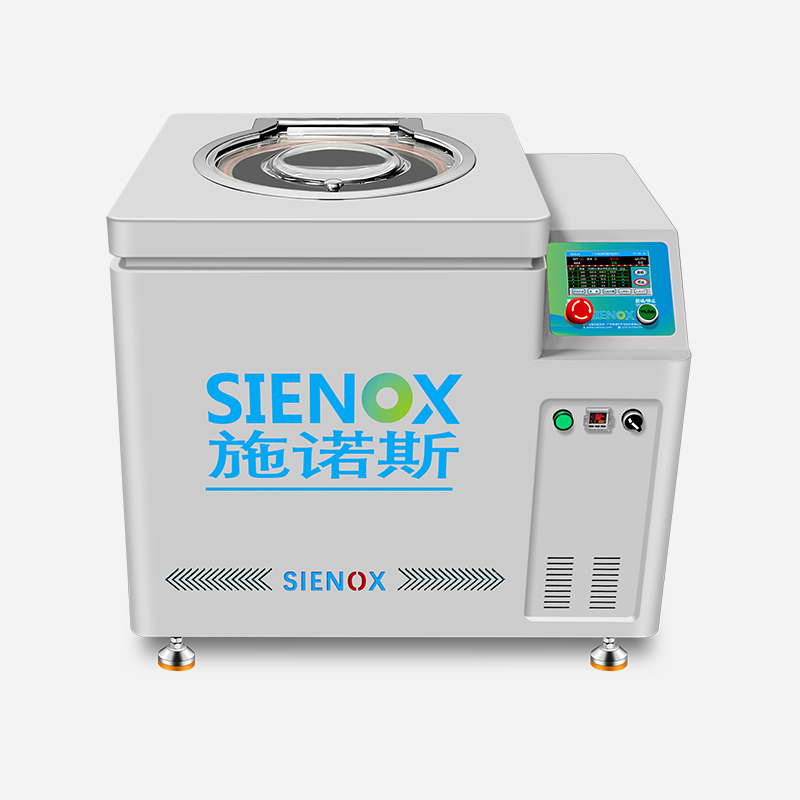
行星式真空脱泡搅拌机 SIE-MIX1000plus
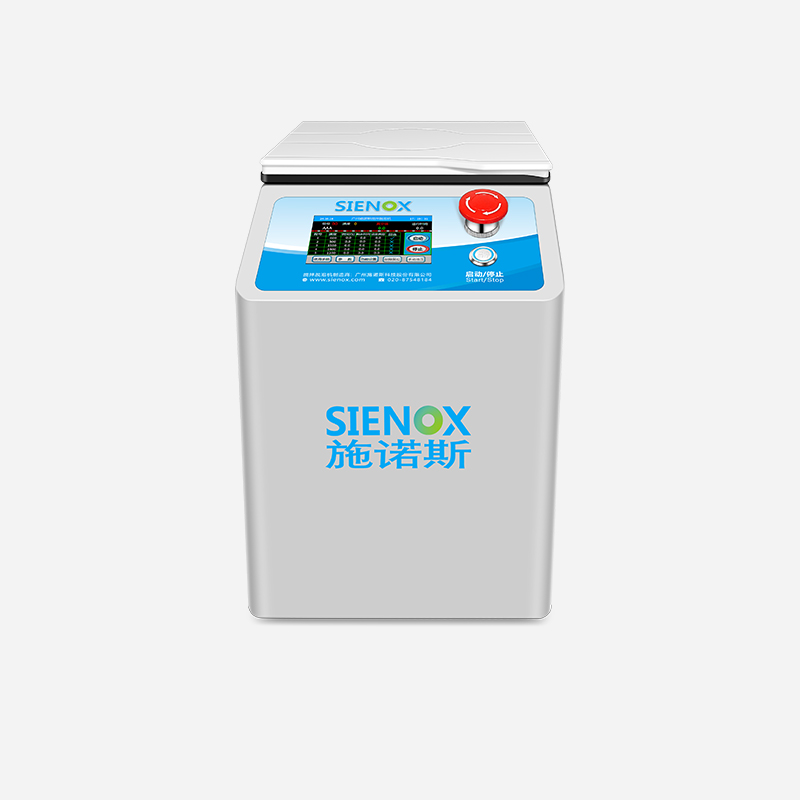
实验室行星式搅拌脱泡机 SIE-CV200
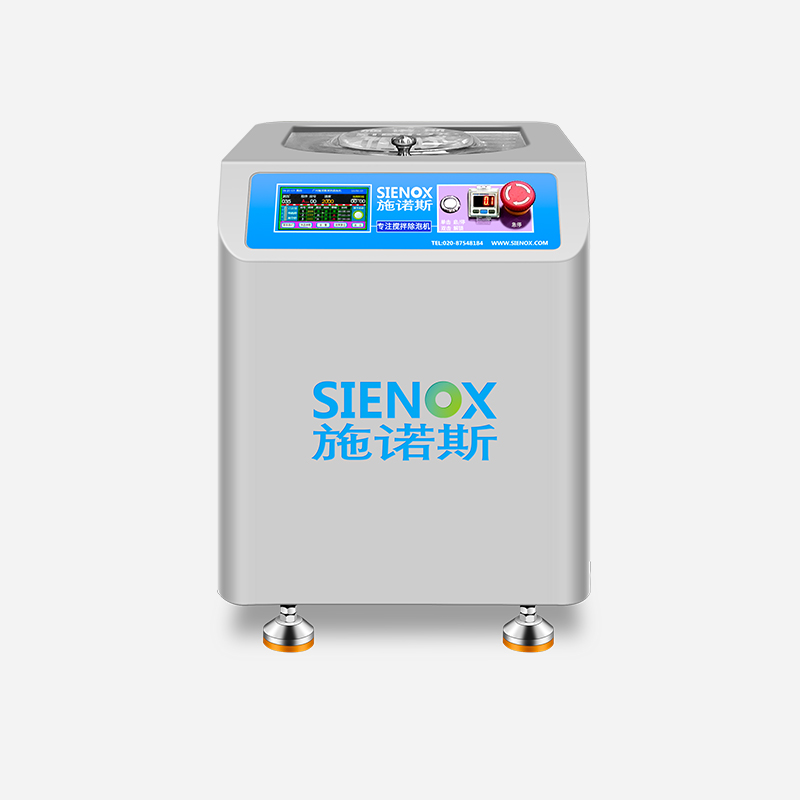
SIENOX行星式脱泡搅拌机 SIE-CV300
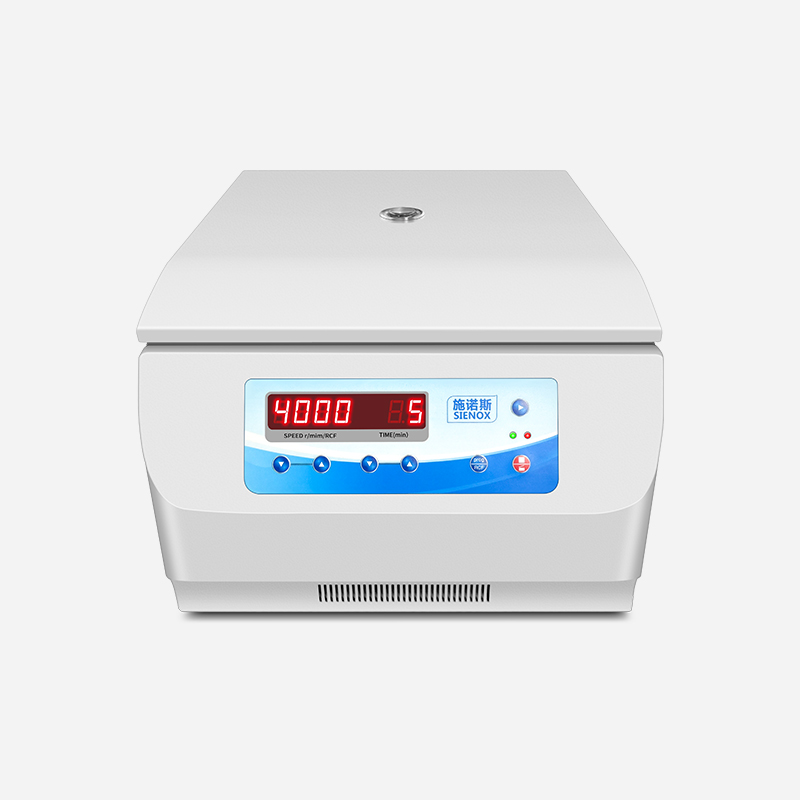
离心脱泡机 SIE-C006
About SIENOX
广州施诺斯(SIENOX),20年脱泡机设备研发与生产的源头厂家
超过1800种材料脱泡案例
纳米级脱泡,满足不同材料多段搅拌除泡需要,支持定制
资质齐全,荣获多项国家专利,联系我们可免费试样