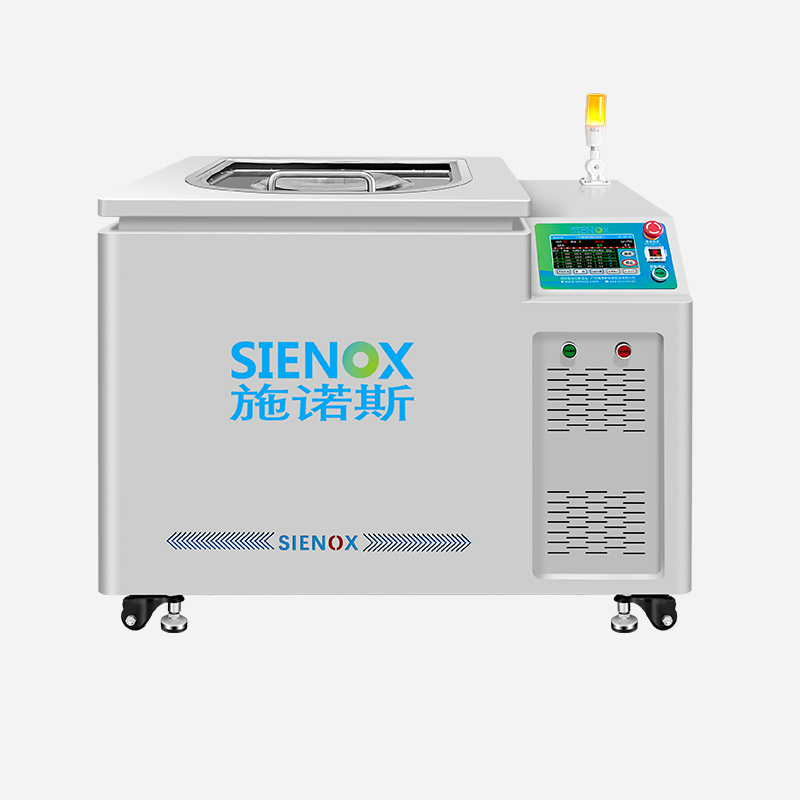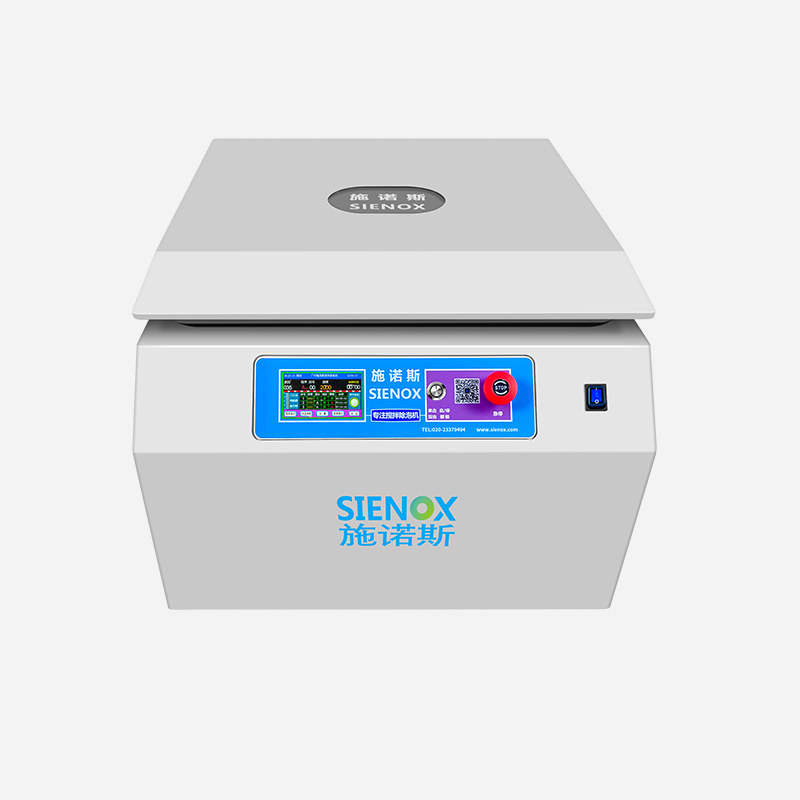


UV curing adhesive (UV glue) features fast curing, solvent-free eco-friendliness and high transparency. It is widely used in optical component bonding, electronic assembly, glass processing and 3C product manufacturing. Photoinitiators inside UV adhesives are sensitive to ultraviolet light. Light exposure during mixing and defoaming must be prevented to avoid premature curing. Meanwhile, air bubbles in low-viscosity systems require professional treatment. SIENOX provides mixing solutions combining light shielding and defoaming.

Material Properties and Defoaming Challenges

• Photoinitiators are sensitive to UV light. Exposure during mixing may trigger partial curing, clogging pipelines or degrading adhesive performance

• Low-viscosity UV adhesives easily entrap air during filling and handling. Residual bubbles after curing impair optical transparency and bonding strength

• Nano functional fillers (e.g. nano SiO₂) tend to agglomerate in UV adhesives and affect surface properties of cured films

• R&D with small batches and multiple formulas requires flexible equipment. Conventional large machines cannot handle laboratory-scale volumes

Core Solutions

Light-shielded mixing design — MIX60 can be equipped with light shielding function to block UV rays throughout mixing and defoaming, preserving the activity of photoinitiators.

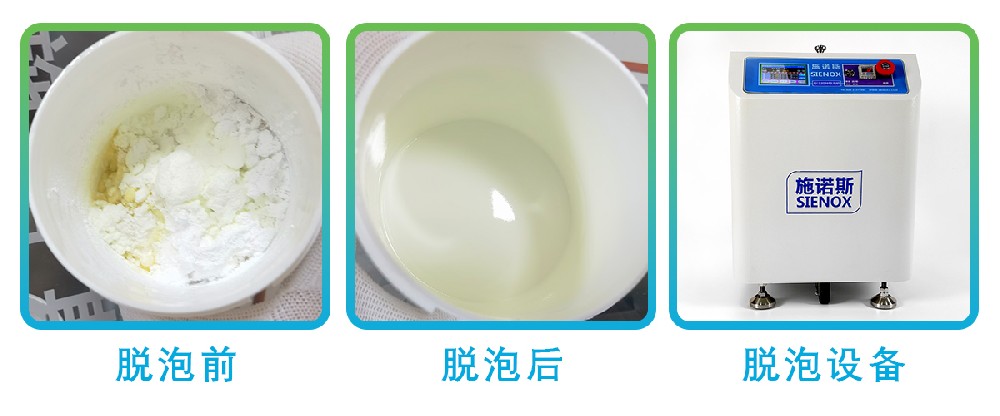
Vacuum defoaming for guaranteed transparency — Microbubbles expand, rupture and are removed under negative pressure. Defoamed UV adhesive forms bubble-free cured films to meet optical-grade requirements.

Flexible laboratory-scale processing — MIX60 has a working volume of 300mL, suitable for rapid iteration and verification of UV adhesive formulas. Multi-segment program control facilitates optimization of process parameters.

Six Major Technical Advantages

• Planetary dual-motion path — Combined revolution and rotation enable three-dimensional mixing within the centrifugal field. Low-viscosity UV adhesives are homogenized with well-dispersed functional fillers under planetary motion

• High-vacuum defoaming — Optional vacuum system makes bubbles expand and burst under negative pressure to eliminate microbubbles, delivering bubble-free cured UV adhesive films

• Precise temperature control — Optional temperature control module adjusts mixing temperature in real time. Light shielding protects photoinitiator activity and prevents premature curing during mixing

• Non-contact mixing — No mixing paddles to avoid cross-contamination. Easy cleaning when switching between different formulas

• Multi-segment program control — Supports setting of multi-stage parameters for rotation speed, duration and vacuum degree, convenient for repeated optimization of mixing and defoaming parameters in R&D

• Intelligent safety interlock — Lid safety sensor locks the cover during operation to ensure safe operation even in laboratory environments

Recommended Equipment and Specifications

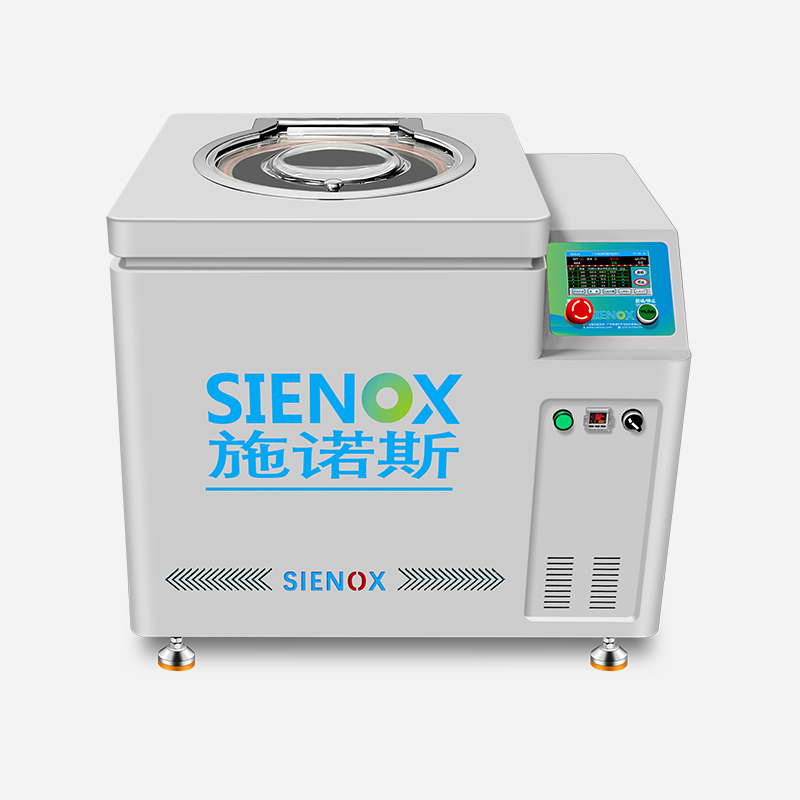
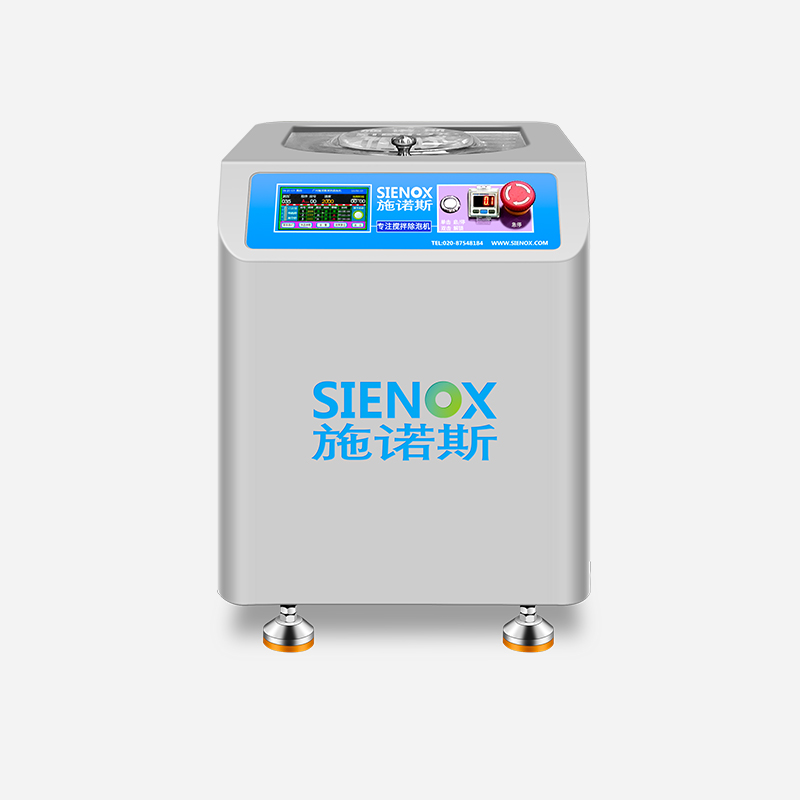
Recommended Model: MIX60

Laboratory R&D Type|Working Volume: 300mL|Rotation Speed: 0-2000rpm|Optional vacuum / temperature control / light shielding functions

Typical Application Fields

• UV adhesive for optical lens bonding

• UV adhesive for LCD panel assembly

• UV shadowless adhesive for glass furniture

• UV conformal coating for PCB circuit boards

• UV curing coating for optical fibers

• UV bonding adhesive for 3C cosmetic parts

• UV adhesive for medical catheter bonding

• UV encapsulating adhesive for electronic components