
Solder Paste Bubbles Solved in One Go! Practical Degassing Solution for SMT Soldering

Full-range vacuum stirring & degassing solution, from low-viscosity printable paste to high-viscosity high-filled solder paste


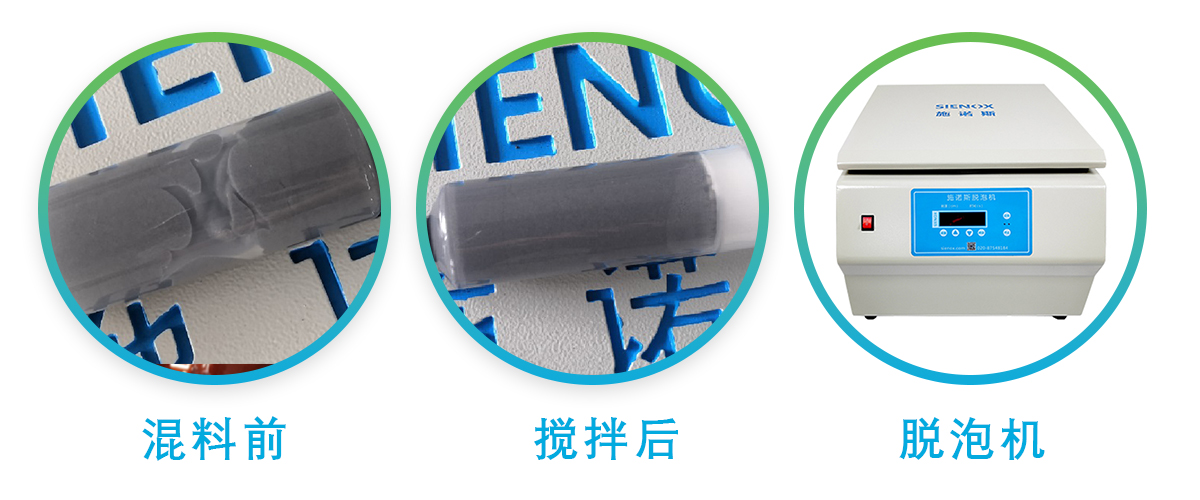
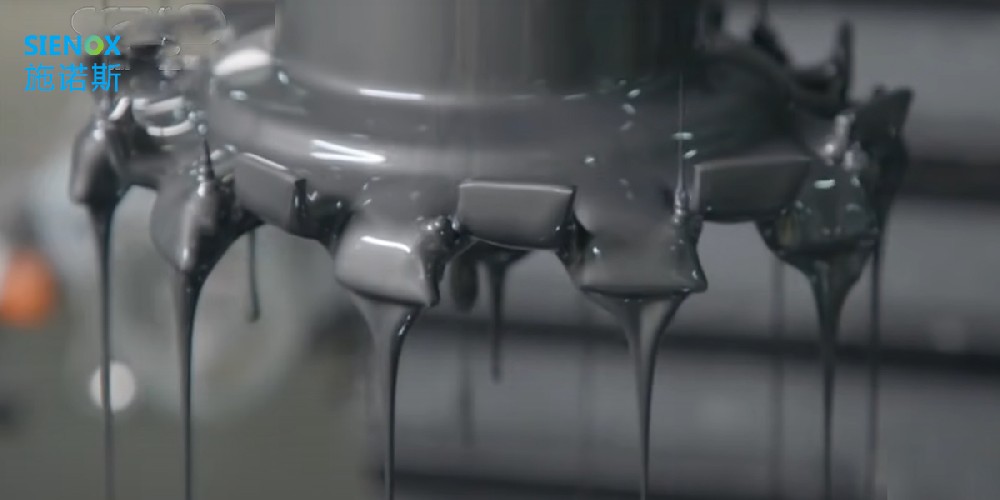
Solder Paste is the core soldering material for SMT surface mount technology. It is a paste mixture consisting of high-proportion solder alloy powder (85%~92 wt%) and flux carrier (rosin-based / water-soluble / no-clean type). Common alloy compositions include lead-free SAC305, leaded Sn63Pb37, SAC0307, Sn96.5Ag3Cu0.5. Solder powder particle sizes typically range from Type 3~Type 6 (25~75μm). Air is easily entrapped during solder paste stirring, dispensing and printing. Given the high specific gravity of solder alloy powder and high viscosity of flux, bubbles cannot escape naturally. Residual bubbles directly compromise solder joint quality, electrical connection reliability and product yield. SIENOX delivers a complete solution including temperature recovery stirring and degassing & discharging for all types of solder paste with self-developed planetary stirring & degassing technology.


◆ Material Properties

Alloy Powder Type

SAC305 (Lead-free), Sn63Pb37 (Leaded), SAC0307, Sn96.5Ag3Cu0.5

Flux Carrier

Rosin-based (RMA), Water-soluble, No-clean (Low Residue)

Metal Content

85%~92% (by weight), matching Type 3~Type 6 solder powder particle sizes

Common Viscosity Range

100~300 Pa·s (approx. 100,000~300,000 cps)

Storage & Handling

Refrigerated storage (5~10℃), temper for 2~4 hours to room temperature before use

Typical Application Scenarios

SMT Mounting, Semiconductor Packaging, LED Soldering, Automotive Electronics, 5G Communications


◆ Mature Application Fields

Solder paste is widely used in core soldering processes for electronic manufacturing. The main application fields and typical working conditions are listed below:


📱 Consumer Electronics

SMT soldering for mobile motherboards, tablets and laptops. Type 4/5 lead-free solder paste commonly used, requiring fine-pitch printing and low void rate

🚗 Automotive Electronics

SMT soldering for ECU control units, on-board sensors and BMS battery management systems. High reliability, vibration resistance and AEC-Q certification required

📡 5G Communication Equipment

SMT soldering for base station power amplifier modules, RF chips and optical modules. Type 5/6 fine powder solder paste commonly used, requiring ultra-low void rate and reliable high-frequency signals

💡 LED Lighting

Soldering of LED chips to aluminum substrates / PCBs, requiring high thermal conductivity solder joints, low thermal resistance and no cold solder joints; high tin-content solder paste is commonly adopted

🔬 Semiconductor Packaging

Flip Chip soldering, BGA ball placement, wafer-level packaging. Type 6 ultra-fine powder solder paste or solder paste plus nano solder material commonly used

🏭 General SMT Mounting

Soldering of various PCB surface components (resistors, capacitors, ICs, QFP). Type 3/4 solder paste commonly used, featuring good printability and release performance

🏥 Medical Devices

PCBA soldering for medical electronics (monitors, imaging equipment, implantable devices). High reliability, low no-clean residue and medical certification required

✈️ Aerospace

Soldering of avionics PCBA and satellite electronic modules, requiring ultra-high reliability, ultra-low void rate and aerospace-grade certification

🔋 New Energy Batteries

Soldering of battery Pack BMS boards and battery tab connections, requiring high soldering strength, high temperature aging resistance and low contact resistance


◆ Core Issues Caused by Bubbles

🕳️ Solder Joint Voids / Blowholes

Bubbles inside solder paste expand sharply under high reflow temperature and form internal voids within solder joints. IPC standard requires void rate ≤25%. Excessive residual bubbles directly lead to nonconforming solder joints.

💪 Insufficient Soldering Strength

Bubbles occupy the effective soldering cross-section of solder joints, reducing mechanical strength and shear resistance. Solder joints tend to crack under reliability tests such as vibration, drop and thermal cycling.

🔌 Unreliable Electrical Connection

Solder joint voids increase contact resistance and degrade high-frequency signal transmission quality. In 5G RF modules and high-speed digital circuits, voids cause signal reflection and impedance mismatch, resulting in functional failure in severe cases.

⏱️ Fluctuating Printing Quality

Bubble-containing solder paste causes stringing, slumping and poor release during stencil printing, leading to inconsistent solder volume, bridging short circuits and insufficient solder cold joints, which directly impact production yield.


◆ Recommended Process — Planetary Stirring & Degassing

Planetary stirring & degassing is the core process solution to eliminate bubbles in solder paste. Through planetary motion of rotation and revolution, uniform stirring and high-efficiency degassing are completed synchronously on tempered solder paste, especially suitable for high-viscosity paste systems composed of high-specific-gravity solder powder and flux.


Step 1  Tempering & Opening

Take solder paste out of refrigeration and temper at room temperature for 2~4 hours. Do not open until the paste temperature matches ambient temperature to avoid condensate contamination

Step 2  Vacuum Stirring & Degassing

Load solder paste into planetary stirring degasser. Stir for 2~5 min under -95KPa vacuum to realize uniform dispersion of solder alloy powder and simultaneous bubble removal

Step 3  Stencil Printing / Dispensing

Degassed solder paste becomes uniform and dense, directly applicable for stencil printing or syringe dispensing with remarkably improved printing release performance

★ Unique Advantages of Solder Paste Degassing

One-step stirring + degassing, improving homogeneity between solder powder and flux; vacuum environment prevents solder paste oxidation and greatly boosts printing yield


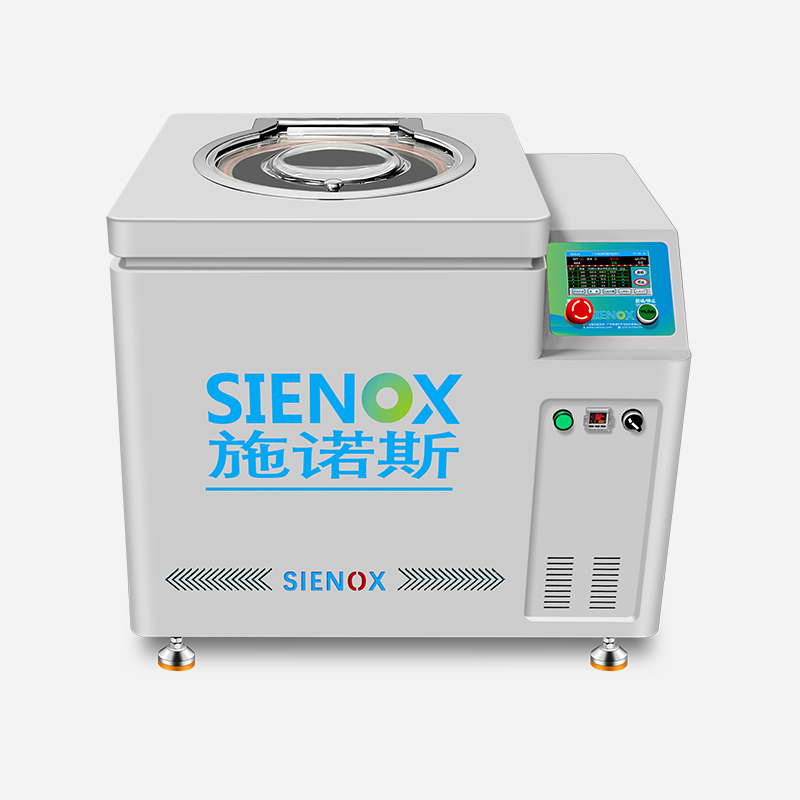
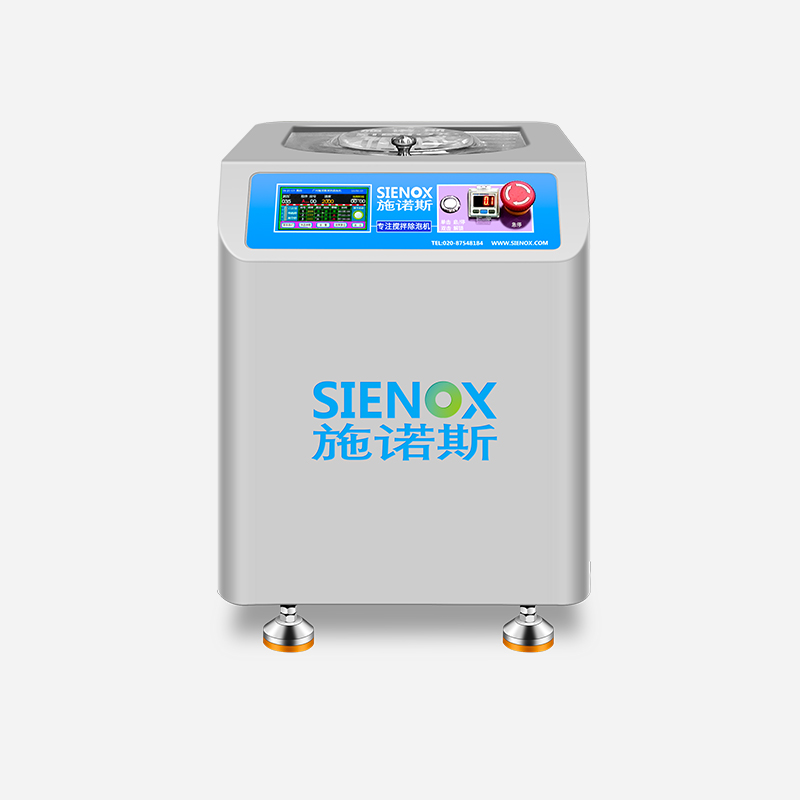
◆ Recommended Equipment

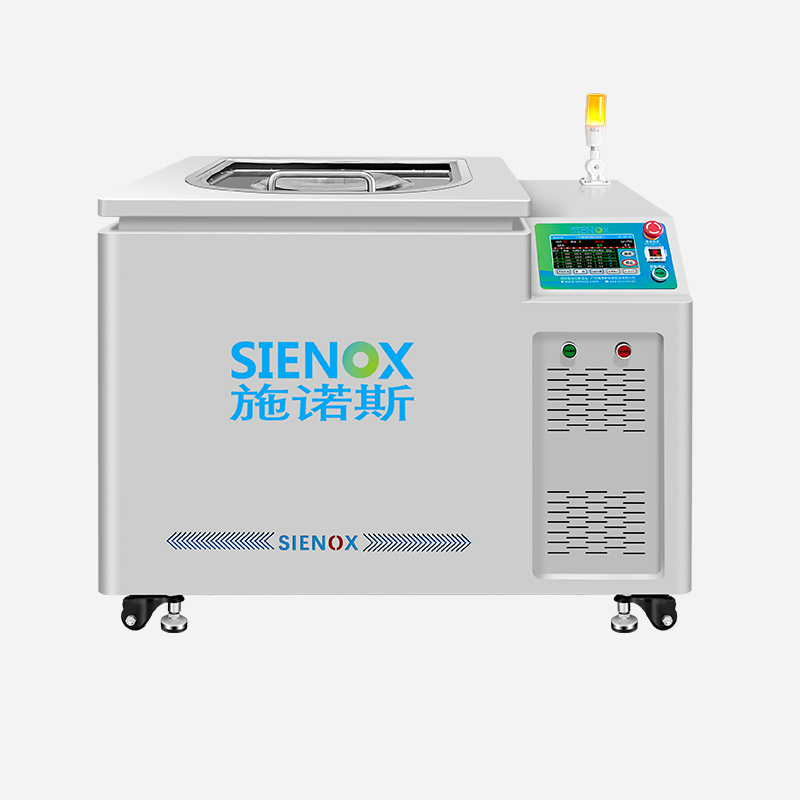
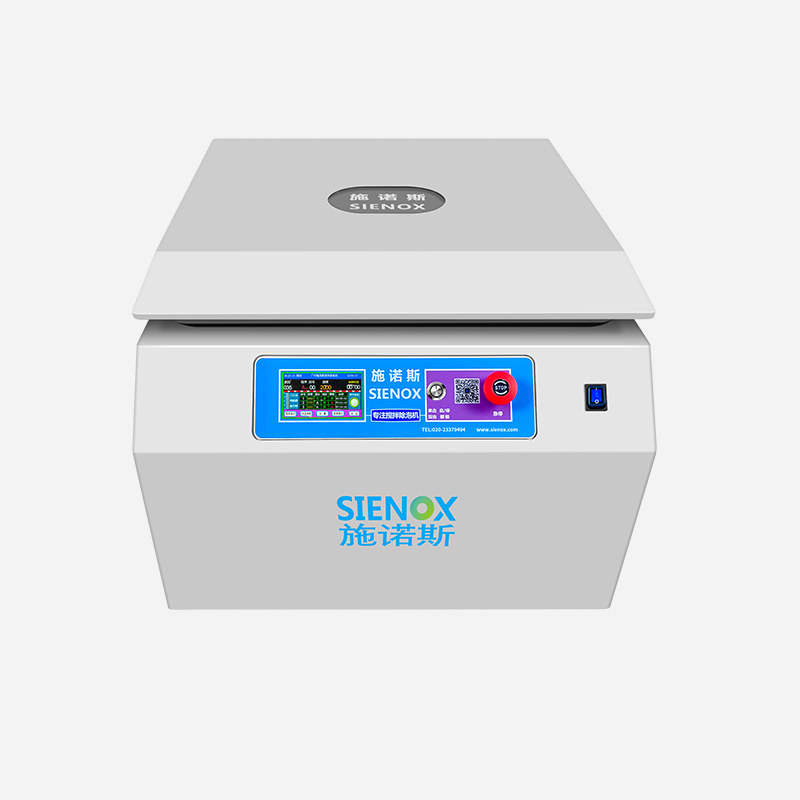
  1. MIX60 — Suitable for small-batch solder paste degassing, single processing capacity ≤600ml. For laboratory/R&D lines, fast temper stirring & degassing, simple operation and quick cleaning; vacuum module optional.

  2. MIX90 — Suitable for medium-batch solder paste degassing, viscosity ≤200,000 cps. General-purpose model covering mainstream SMT production line solder paste, balancing stirring and degassing efficiency; -95KPa vacuum optional, ideal for small & medium batch production lines.

  3. MIX1000PLUS — Suitable for high viscosity & high throughput, viscosity ≤200,000 cps. Production-grade stirring degasser, large capacity, outstanding efficiency for continuous industrial operation; vacuum module as standard.

  4. MIX2000 — Designed for mass production and high-capacity requirements. Large-volume industrial degasser, stable operation and simple maintenance, suitable for long continuous operation; vacuum module as standard.


◆ Test Cases

Below are practical degassing test cases for solder pastes of different viscosity ranges, verifying the applicability of planetary stirring degassing process for various solder paste scenarios.


▶ Case 1: Standard SMT Printing Solder Paste (Type 4)

Item

Parameters

Test Material

Lead-free Solder Paste SAC305 Type 4 (20~38μm solder powder, metal content 88.5%, no-clean flux)

Viscosity

Approx. 180 Pa·s (180,000 cps)

Test Model

MIX90

Vacuum Level

-95 KPa

Rotation Speed

2,000 rpm

Time

3 min

Temperature

Ambient (25℃)

✅ Degassing Result: Solder paste is evenly stirred with consistent dispersion of solder powder and flux. Bubble removal rate>98%. The paste is dense and smooth without pores. It shows good release performance during stencil printing with full solder dots, no stringing or slumping. Solder joint void rate<5% after reflow soldering.


▶ Case 2: Fine-pitch High-density Solder Paste (Type 5)

Item

Parameters

Test Material

Lead-free Solder Paste SAC0307 Type 5 (10~25μm solder powder, metal content 89.5%, low-residue no-clean type)

Viscosity

Approx. 220 Pa·s (220,000 cps)

Test Model

MIX1000PLUS

Vacuum Level

-95 KPa

Rotation Speed

1,800 rpm

Time

5 min

Temperature

Ambient (25℃)

✅ Degassing Result: Fine powder solder paste is uniformly stirred without solder powder agglomeration. Bubble removal rate>98%, paste is fine and dense. Good forming for 0.4mm pitch QFN / 0201 components printing. Solder joint void rate<8% after reflow, complying with IPC Class 3 standard.


▶ Case 3: High-viscosity High-filled Solder Paste (Type 6 Semiconductor Grade)

Item

Parameters

Test Material

Semiconductor-grade Solder Paste SAC305 Type 6 (5~15μm solder powder, metal content 92%, high-viscosity formulation)

Viscosity

Approx. 300 Pa·s (300,000 cps)

Test Model

MIX1000PLUS

Vacuum Level

-95 KPa

Rotation Speed

1,500 rpm

Time

5 min

Temperature

Ambient (25℃)

✅ Degassing Result: Bubble removal rate>98% in ultra-high viscosity semiconductor-grade solder paste. Ultra-fine solder powder disperses evenly without agglomeration. The paste is dense and smooth, suitable for high-precision packaging processes such as Flip Chip and BGA ball placement. Solder joint void rate<3%.


◆ Comparison Before & After Improvement

Comparison Item

Before Degassing

After Degassing

Solder Joint Void Rate

Bubbles expand and form large voids, void rate>25%

Void rate<5%, meets IPC Class 3 standard

Soldering Strength

Bubbles weaken solder joint cross-section, shear test fails

Dense & full solder joints, shear strength significantly improved

Electrical Reliability

Voids raise contact resistance and trigger high-frequency signal reflection

Stable contact resistance, reliable signal transmission

Printing Quality

Stringing, slumping, poor release and inconsistent solder volume

Smooth release, full and consistent solder dots

Batch Consistency

Solder powder settling & stratification, inconsistent paste status per can

Reproducible parameters, excellent batch consistency

Production Yield

Frequent defects such as bridging, cold solder and insufficient solder

Defect rate greatly reduced, stable yield improvement


🎯 Free Sample Test
   Send us your solder paste samples, we will test degassing parameters and issue a test report