


Mixing Container

TEL:18925129293


SIENOX Stainless‑steel Mixing Tank 0‑50L


Stainless‑steel Material Resists Corrosion, High Temperature and Organic Solvents · High Mechanical Strength for Long‑term Repeated Use
Corrosion & Organic‑solvent Resistance + Industrial‑grade High‑temperature Resistance + Long‑term Reusable
SIENOX stainless‑steel mixing tanks are available in multiple stainless‑steel specifications. Featuring corrosion resistance, high‑temperature resistance and organic‑solvent resistance with high mechanical strength for long‑term repeated service. Compatible with full series of SIENOX vacuum defoaming mixers, suitable for harsh working conditions and industrial‑grade applications.
✓ 0‑50L ✓ Stainless‑steel Material ✓ Multiple Color Options
Why Stainless‑steel Mixing Tanks Are Required
Stainless‑steel mixing tanks become an irreplaceable choice when higher requirements are placed on container cleanliness and durability.
Organic‑solvent Resistance for Chemical Working ConditionsMaterials such as electronic slurries, adhesives and coating materials often contain organic solvents (acetone, ethanol, toluene, etc.). PP and HDPE plastic containers tend to swell, deform or even dissolve upon contact with organic solvents, which damages containers and contaminates materials. With outstanding chemical stability, stainless steel resists organic‑solvent corrosion and serves as a reliable option for solvent‑containing materials. | High‑temperature Resistance for High‑temperature ProcessesCertain mixing and defoaming processes require temperatures above 100°C, e.g. melting high‑temperature resins, preparing hot‑melt adhesives and processing high‑temperature reactive slurries. Plastic mixing tanks cannot reach such temperature limits. Stainless‑steel mixing tanks feature high‑temperature resistance and dimensional stability without deformation under heat to ensure process safety. | Industrial‑grade Durability for Long‑term EconomyStainless steel delivers high mechanical strength with drop and impact resistance, unlike fragile plastic containers. One‑time investment enables long‑term repeated use with far longer service life. For frequent‑use and continuous industrial production, stainless‑steel mixing tanks bring lower long‑term costs versus frequently‑replaced plastic containers. |
✨ Pain points of traditional containers: Plastic containers swell and deform and contaminate materials when handling solvent‑containing materials; they soften and become unusable under high‑temperature conditions. Glass containers are fragile and unsafe, and ordinary metal containers corrode and rust easily. Stainless‑steel mixing tanks meet multiple requirements including corrosion resistance, high‑temperature resistance, organic‑solvent resistance and high mechanical strength in one go.
Why Choose SIENOX Stainless‑steel Mixing Tanks
Solve Container‑selection Pain Points for Harsh Working Conditions
Comprehensive Protection by Stainless‑steel MaterialMade of premium stainless steel with excellent chemical stability, it resists acid, alkali and organic‑solvent corrosion for various chemical materials. High‑temperature resistance ensures stable dimension without deformation for high‑temperature defoaming processes. High mechanical strength delivers drop and impact resistance, avoiding breakage common to plastic and glass containers. Smooth surface prevents material adhesion for easy residue‑free cleaning, ideal for frequent material change and high‑cleanliness‑required scenarios. | Flexible Selection of Multiple SpecificationsMultiple specifications are available to satisfy diverse throughput demands, ranging from small‑volume laboratory use to medium‑and‑large‑volume production‑grade applications for flexible selection according to process scale. Reusable stainless‑steel brings long‑term benefits from one‑time investment, offering better cost‑performance than repeatedly replaced plastic containers under frequent‑use conditions. | Reliable Equipment CompatibilitySIENOX stainless‑steel mixing tanks are custom‑designed for SIENOX defoaming mixers with precisely‑matched interface dimensions for easy installation and removal. Tight sealing prevents air leakage and pressure drop during vacuum defoaming. Compatible with full‑series equipment including mixing defoamers, vacuum mixing defoamers, temperature‑controlled defoamers and centrifugal defoamers. |
✨ Stainless‑steel mixing tanks are a reliable choice if you need to process solvent‑containing materials, perform high‑temperature defoaming processes, or have high requirements for container cleanliness and durability.
Matching Instructions for Mixing Tanks and Equipment
SIENOX stainless‑steel mixing tanks are specially designed for SIENOX defoaming mixers.
SIENOX stainless‑steel mixing tanks are specially designed for SIENOX defoaming mixers with precisely‑matched interface dimensions. Place the mixing tank into the mixing chamber and secure it with equipment fixtures or adapters, then connect the cover to the vacuum port of the machine. During defoaming and mixing, the tank revolves and rotates inside the unit, and materials are mixed and defoamed within the sealed tank. Installation Steps: Load materials into the mixing tank and fasten the sealing cover Put the tank into the mixing chamber and fix it in place Set mixing‑defoaming parameters and start the equipment Take out the tank upon completion for subsequent procedures | 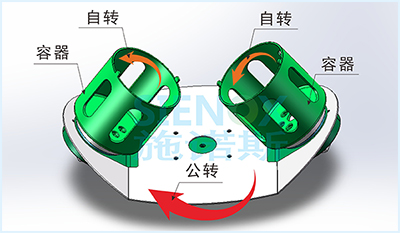 |
Technical Specifications
Complete Technical Specifications Overview, Customizable on Demand
| Specification | |
| Product Name | Stainless‑steel Mixing Tank |
| Capacity | 0‑50L; Customizable |
| Material | Stainless Steel |
| Temperature Resistance Range | High‑temperature Resistant |
| Corrosion Resistance | Yes |
| Organic‑solvent Resistance | Yes |
| Mechanical Strength | Excellent (Drop & Impact Resistant) |
| Surface Treatment | Smooth Surface, Easy to Clean |
| Application Scenarios | Organic Solvents / High‑temperature / Corrosive Materials |
我们的合作伙伴
深受全球知名工业制造集群及前沿高校实验室信赖
FAQ 您关心的问题
为您解答关于产品性能及日常工艺选型中的常见疑问
-
真空脱泡搅拌机是什么?用于哪些行业?
真空脱泡搅拌机是在真空环境下同步完成搅拌与脱泡的设备,脱泡同时混料,避免二次气泡混入,常用于环氧树脂、硅胶、AB 胶等高粘度材料的混料脱泡处理,广泛应用于新能源电池、半导体封装、LED、电子灌封、胶粘剂等行业。
-
广州施诺斯主要生产哪些设备?
主要产品包括搅拌脱泡机、真空脱泡搅拌机、真空脱泡机、高压脱泡机、真空搅拌机、实验室均质机、三辊研磨机、三维混粉机,以及点胶机、分装机等配套设备和夹具、搅拌罐、针筒等辅品耗材。
-
源头厂家采购脱泡设备有什么优势?
源头厂家直供可省去中间环节,价格更透明,同时能提供参数定制、来料试机、工艺验证等服务,售后响应更直接。
-
搅拌脱泡机的工作原理?
施诺斯设备采用行星式混合原理:料罐在自转的同时绕公转轴公转,物料在罐内随之翻动混合,同时抽真空脱泡。整个过程设备不设搅拌桨,搅拌部件不接触物料,不会引入金属异物,混合均匀不分层。
-
为什么选择施诺斯?
施诺斯(SIENOX)是广州施诺斯科技股份有限公司旗下品牌,2014 年成立,专注脱泡机与搅拌机的研发与制造,团队自 2006 年起从事真空搅拌脱泡设备研发。设备采用非接触式设计,不设搅拌桨,行星式公转加自转运动辅以真空系统,高效除泡,混合均匀不分层。公司产品涵盖搅拌脱泡机、真空脱泡搅拌机、真空脱泡机、高压脱泡机、真空搅拌机、实验室均质机、三辊研磨机、三维混粉机,以及点胶机、分装机等配套设备和夹具、搅拌罐、针筒等辅品耗材,广泛应用于新能源、半导体、LED、电子灌封、胶粘剂、涂料、油墨等行业。通过 ISO9001、CE 认证,拥有 30 余项专利,服务富士康、比亚迪、清华大学等企业与科研院所。
Technical Specification List
Full‑line parameter specifications to assist your accurate process‑model selection
| Product Name | PP Mixing Tank | HDPE Mixing Tank | Stainless Steel Mixing Tank |
| Capacity | 0-50L; Customizable | 0-300mL; Customizable | 0-50L; Customizable |
| Material | PP | HDPE | Stainless Steel |
| Temperature Range | -24°C ~ 60°C | -24°C ~ 100°C | High temperature resistant |
| Corrosion Resistance | Yes | Yes | Yes |
| Organic Solvent Resistance | No | No | Yes |
| Mechanical Strength | Good (shock resistant) | Good (shock resistant) | Excellent (shock and impact resistant) |
| Surface Finish | Smooth surface, easy to clean | Smooth surface, easy to clean | Smooth surface, easy to clean |
| Application | Mixing and defoaming at room temperature | Auxiliary defoaming with heating | Organic solvent, high temperature and corrosive materials |
Applicable Material Types
Covering stirring and debubbling applications of typical materials across six major industries
PowderMetal Powder / Ceramic Powder / Pharmaceutical Powder |
Solid Particles |
PasteCream |
AdhesiveVarious Types of Glues |  SlurryBattery Slurry, Ceramic Slurry |
Acid‑alkaline Materials |

Comprehensive Equipment Operation Demo Videos
Gain intuitive, clear, dynamic insight into synchronous defoaming with planetary centrifugal force and high negative pressure
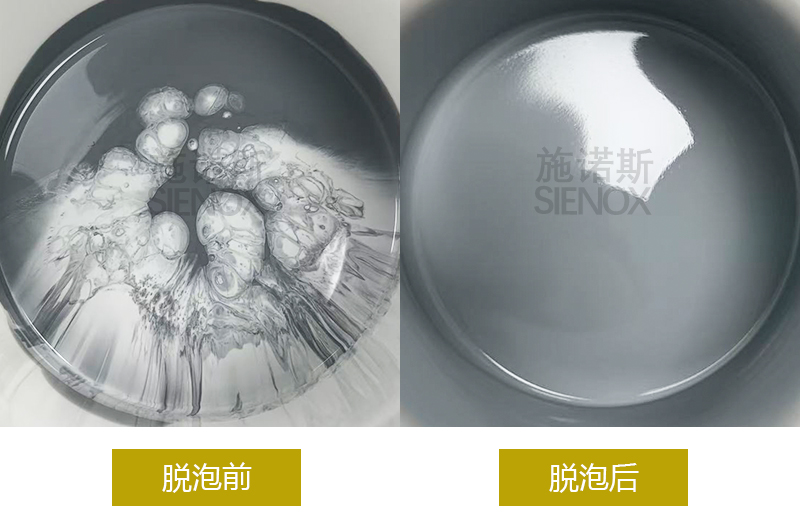
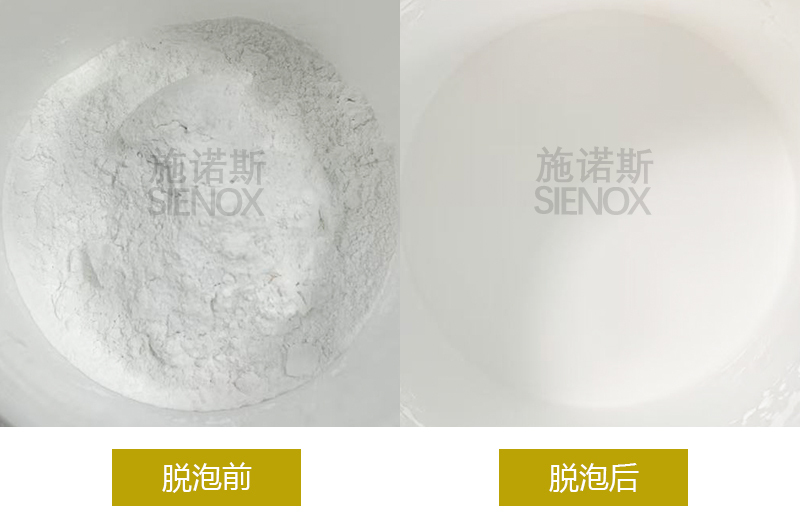
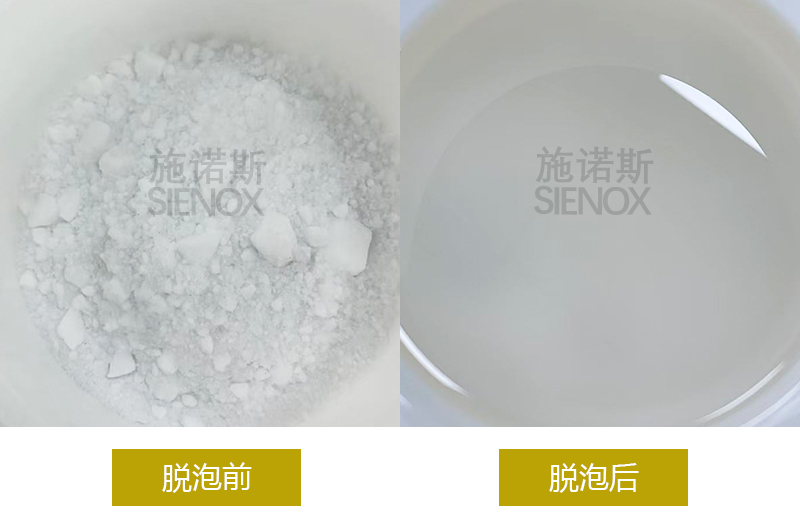
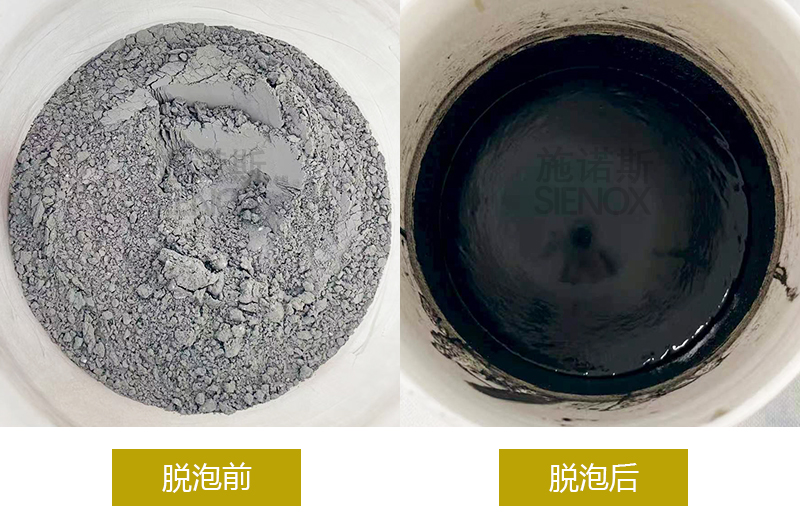
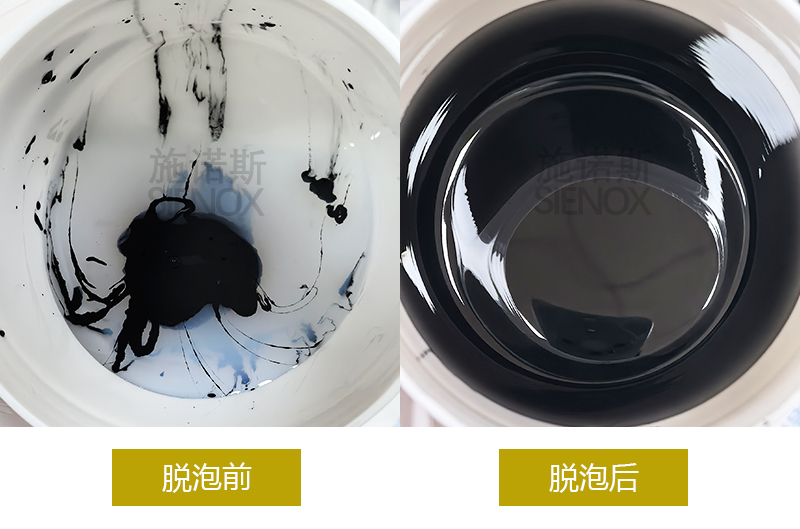
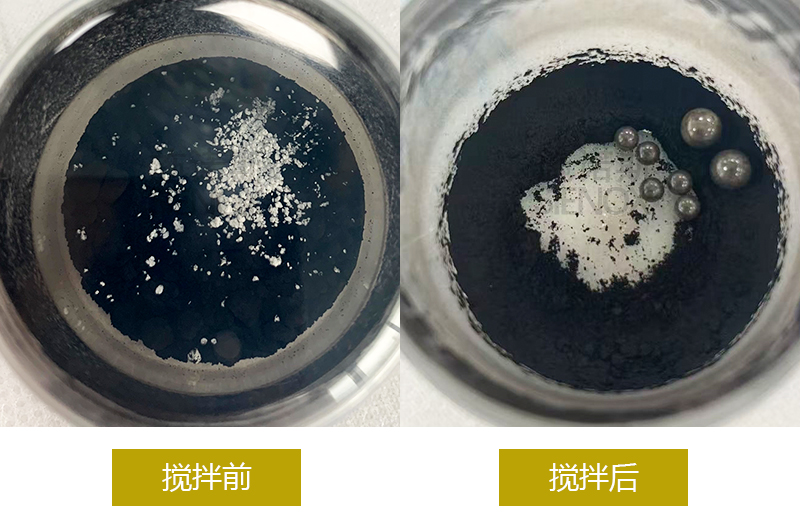
Actual‑test Performance Demonstration
Lab Sample Actual Test Results
AB Glue |
Glue + Powder |
Glass Powder |
Electronic Glue + Powder |
Epoxy Resin |
Battery Slurry Powder |
Usage Precautions
| Precautions | Description |
| Cleaning & Maintenance | Clean promptly after use to keep smooth surfaces and prevent material residue |
| Seal Inspection | Check the integrity of sealing cover before use to guarantee sealing performance |
| Specification Matching | Applicable tank specifications vary for different machine models. Please consult before selection |
| Acid‑alkaline Environment | Though corrosion‑resistant, regular surface inspection is recommended for long‑term exposure to strong acids and alkalis |
* Internal laboratory test data. Actual improvement varies with material formulas. Contact sales for real‑world customer cases.