

Vacuum Defoaming Mixer

TEL:18925129293


Compact Laboratory Planetary Vacuum Mixer‑Degasser SIE‑MIX80


300mL Small‑Sample Equipment · Belt‑Drive High‑Speed Mixing & Defoaming All‑in‑One Machine
300mL Laboratory Capacity + Standard Vacuum Function + 0‑3000rpm Stepless Speed Adjustment
The SIE‑MIX80 planetary mixer defoamer covers mixing and defoaming requirements from 0‑300 mL. Featuring low‑noise belt‑drive and synchronous dual‑drive mixing‑defoaming of revolution and rotation, it delivers consistent density, homogeneous dispersion and thorough degassing for multi‑material blends. Ideal for small‑batch processing of inks & coatings, silicone materials and laboratory R&D experiments. Customization is available with one‑stop solution support.
✓ CE Certified 、✓ ISO9001 Quality System ✓ RoHS Compliance ✓ Custom Voltage Available (110V/220V)
Why remove micro‑bubbles from materials?
Residual micro‑bubbles directly reduce yield and degrade performance stability of end‑products.
Research & AcademiaIn new‑material R&D for universities and research institutes, bubbles inside slurries and gels cause deviation in experimental data and impair accuracy & repeatability of material‑property characterization. In nanomaterial dispersion tests, bubbles trap agglomerates and distort dispersion‑performance evaluation. Research experiments demand high‑data reliability; even tiny residual bubbles may bias experimental conclusions and hinder project progress as well as paper quality. | Ink & Coating IndustryBubbles in inks trigger pinholes and streaks on printed surfaces, undermining printing quality and color consistency. Bubbles in coatings create film defects and reduce adhesion and weather resistance. During lab‑scale small‑batch formulation development for inks and coatings, bubble issues interfere with formulation screening and extend R&D cycles. | Silicone IndustryBubbles in silicone gels reduce transparency and mechanical properties, degrading potting and encapsulation quality. Bubbles in silicone rubber compounds produce surface flaws and internal voids after vulcanization. During lab sample preparation, high‑viscosity silicone materials suffer difficult bubble removal, which distorts material‑property test results. |
✨ Pain points of conventional workflows: Manual stirring or standard impeller mixers actively draw in air, generating more bubbles with agitation. Static degassing takes long time with limited outcomes. High‑speed mixing equipment generates loud noise and disturbs lab environments. The belt‑driven planetary mixer‑degasser separates bubbles during mixing via centrifugal force; its quiet operation fits laboratory conditions.
Why choose SIE‑MIX80?
Three core strengths to cover full‑lab mixing‑degassing workflows
Belt‑Drive for Low‑Noise & Stable OperationThe MIX80 adopts belt‑drive design. Compared with gear drive, it delivers lower operating noise, minimal vibration and excellent stability at high‑speed running, ideal for noise‑sensitive laboratories and R&D centers. Featuring a simplified belt‑drive structure, routine maintenance only requires belt replacement without specialized gear servicing, cutting lab equipment maintenance cost and downtime. | One‑Step Defoaming via High‑Speed CentrifugationSynchronized revolution and rotation generate dual centrifugal shear force to achieve homogeneous dispersion even for medium‑to‑high viscosity materials. Centrifugal force continuously removes bubbles during mixing, completing mixing and defoaming in one single step within approximately 1 minute for higher efficiency versus conventional multi‑step processes. The flexible belt‑drive absorbs shock during rapid start‑stop cycles and reduces instant impact on materials. | Non‑Contact Clean MixingMaterials are mixed by centrifugal force inside sealed containers without impeller contact. Simply replace containers for material change to skip cleaning and effectively prevent cross‑contamination. Non‑contact mixing lowers shear heat buildup to avoid premature curing of heat‑sensitive materials, suitable for high‑purity scenarios such as scientific research and pharmaceutical development. The touch‑screen supports storage of 100 recipe sets for one‑touch recall and consistent process repeatability. |
✨ Integrating quiet belt‑drive operation, one‑step high‑speed centrifugal degassing and non‑contact clean mixing, MIX80 is ideal for laboratory R&D and small‑batch prototyping where low noise and easy maintenance are priorities.
Working Principle
Synchronized dual‑power revolution‑and‑rotation completes mixing and degassing in one cycle
Step 1: Centrifugal Force Generated by Revolution The belt‑drive spins the revolution plate at high speed to generate centrifugal force on materials inside the container, driving full‑range material convection for macro‑mixing. Meanwhile, centrifugal force pushes low‑density bubbles toward the rotating axis to gather and escape. The flexible belt‑drive ensures smoother high‑speed operation and reduces equipment vibration and noise. Step 2: Shear Force Provided by Rotation Containers rotate around their own axis to generate directional shear force, breaking up agglomerated particles for micro‑dispersion. Precisely calculated revolution‑to‑rotation speed ratio guarantees efficient full‑volume mixing. Shear force thins bubble membranes and accelerates bubble rupture. With no built‑in impellers contacting materials, the risk of contamination from metal debris is minimized while original chemical properties of materials are preserved. With synchronized revolution and rotation, materials complete the full‑process of "Mixing → Dispersion → Defoaming" inside sealed containers. Belt‑drive guarantees low‑noise and stable operation. | 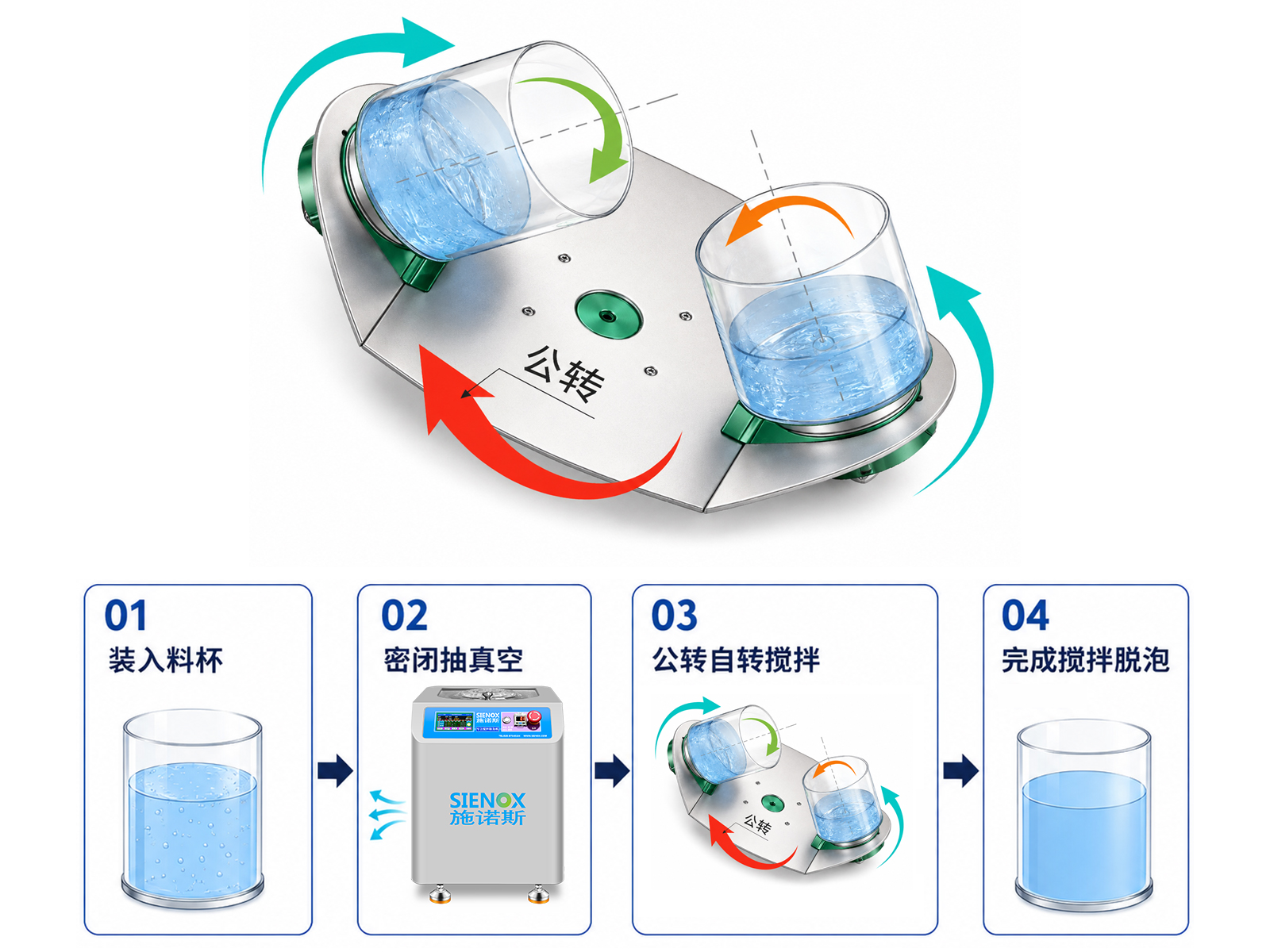 |
Quick Technical Specifications
Complete technical parameters, custom configurations available
| Model | SIE‑MIX80 |
| Mixing Capacity | 0‑300 mL (standard vessel) * Larger volume customizable |
| Vessel Type | Test tube / Jar / Cup; supports syringe & cartridge adapters |
| Number of Vessels | 1 or 2 jars (user‑selectable) |
| Max Speed | 0‑3000 RPM (stepless adjustable) |
| Revolution / Rotation Ratio | Fixed planetary ratio |
| Vacuum Degree | Standard: –98 kPa / Optional: –100 kPa |
| Control System | Touch‑screen, stores up to 100 recipe sets |
| Power Supply | 220V, 50/60Hz (110V US/JP standard customizable) |
| Dimensions (W×D×H) | 510 × 430 × 500 mm |
| Net Weight | Approx. 95 kg |
| Certifications | CE, ISO9001, RoHS Compliance |
我们的合作伙伴
深受全球知名工业制造集群及前沿高校实验室信赖
FAQ 您关心的问题
为您解答关于产品性能及日常工艺选型中的常见疑问
-
真空脱泡搅拌机是什么?用于哪些行业?
真空脱泡搅拌机是在真空环境下同步完成搅拌与脱泡的设备,脱泡同时混料,避免二次气泡混入,常用于环氧树脂、硅胶、AB 胶等高粘度材料的混料脱泡处理,广泛应用于新能源电池、半导体封装、LED、电子灌封、胶粘剂等行业。
-
广州施诺斯主要生产哪些设备?
主要产品包括搅拌脱泡机、真空脱泡搅拌机、真空脱泡机、高压脱泡机、真空搅拌机、实验室均质机、三辊研磨机、三维混粉机,以及点胶机、分装机等配套设备和夹具、搅拌罐、针筒等辅品耗材。
-
源头厂家采购脱泡设备有什么优势?
源头厂家直供可省去中间环节,价格更透明,同时能提供参数定制、来料试机、工艺验证等服务,售后响应更直接。
-
搅拌脱泡机的工作原理?
施诺斯设备采用行星式混合原理:料罐在自转的同时绕公转轴公转,物料在罐内随之翻动混合,同时抽真空脱泡。整个过程设备不设搅拌桨,搅拌部件不接触物料,不会引入金属异物,混合均匀不分层。
-
为什么选择施诺斯?
施诺斯(SIENOX)是广州施诺斯科技股份有限公司旗下品牌,2014 年成立,专注脱泡机与搅拌机的研发与制造,团队自 2006 年起从事真空搅拌脱泡设备研发。设备采用非接触式设计,不设搅拌桨,行星式公转加自转运动辅以真空系统,高效除泡,混合均匀不分层。公司产品涵盖搅拌脱泡机、真空脱泡搅拌机、真空脱泡机、高压脱泡机、真空搅拌机、实验室均质机、三辊研磨机、三维混粉机,以及点胶机、分装机等配套设备和夹具、搅拌罐、针筒等辅品耗材,广泛应用于新能源、半导体、LED、电子灌封、胶粘剂、涂料、油墨等行业。通过 ISO9001、CE 认证,拥有 30 余项专利,服务富士康、比亚迪、清华大学等企业与科研院所。
Technical Specification List
Side‑by‑Side Comparison of Series Models for Accurate Model Selection
| Model | SIE‑MIX60 (Gear‑Drive) | SIE‑MIX80 (Belt‑Drive) | SIE‑MIXF301 |
| Mixing Capacity | 0‑300 mL (standard vessel) * Customizable | 0‑300 mL (standard vessel) * Customizable | 0‑300 mL (standard vessel) * Customizable |
| Vessel Type | Test tube / Jar / Cup; supports syringe & cartridge adapters | Test tube / Jar / Cup; supports syringe & cartridge adapters | Test tube / Jar / Cup; supports syringe & cartridge adapters |
| Number of Vessels | 1 or 2 jars (user‑selectable) | 1 or 2 jars (user‑selectable) | 1 or 2 jars (user‑selectable) |
| Max Speed | 0‑3000 RPM (stepless adjustable) | 0‑3000 RPM (stepless adjustable) | 0‑2000 RPM (stepless adjustable) |
| Revolution / Rotation Ratio | Fixed planetary ratio | Fixed planetary ratio | Freely adjustable |
| Vacuum Degree | Standard: –98 kPa / Optional: –100 kPa | Standard: –98 kPa / Optional: –100 kPa | Standard: –98 kPa / Optional: –100 kPa |
| Control System | Touch‑screen, stores up to 100 recipe sets | Touch‑screen, stores up to 100 recipe sets | Touch‑screen, stores up to 100 recipe sets |
| Power Supply | 220V, 50/60Hz (110V US/JP standard customizable) | 220V, 50/60Hz (110V US/JP standard customizable) | 220V, 50/60Hz (110V US/JP standard customizable) |
| Dimensions (W×D×H) | 510 × 430 × 500 mm | 510 × 430 × 500 mm | 510 × 430 × 500 mm |
| Net Weight | 95 kg | 95 kg | 115 kg |
*** The above are typical models only. SIENOS provides customized solutions according to customer requirements. For model selection consultation: 189‑2512‑9293
Multi‑industry Application Solutions
Six‑Industry Typical Material Mixing & Defoaming Applications
Research & AcademiaNanomaterial dispersions, polymer solutions, experimental slurries, functional coating liquids, composite prepregs |
Ink & Coating IndustryUV‑curable inks, solvent‑based inks, water‑borne coatings, industrial baking paints, functional coating liquids |
Silicone IndustrySilicone gels, silicone rubber compounds, silicone resins, thermal‑conductive greases, silicone sealants |
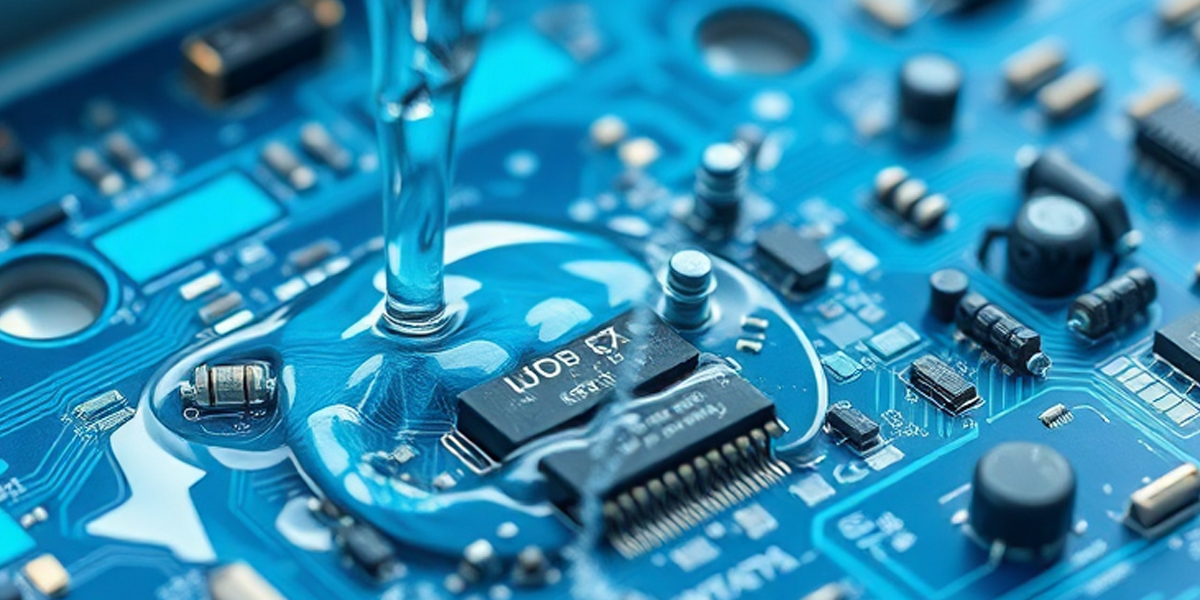
Electronics IndustryConductive silver paste, insulating adhesives, potting adhesives, UV adhesives, thermal‑conductive gels |
Chemical IndustryChemical slurries, resin solutions, catalyst slurries, reactive adhesives, intermediate solutions |
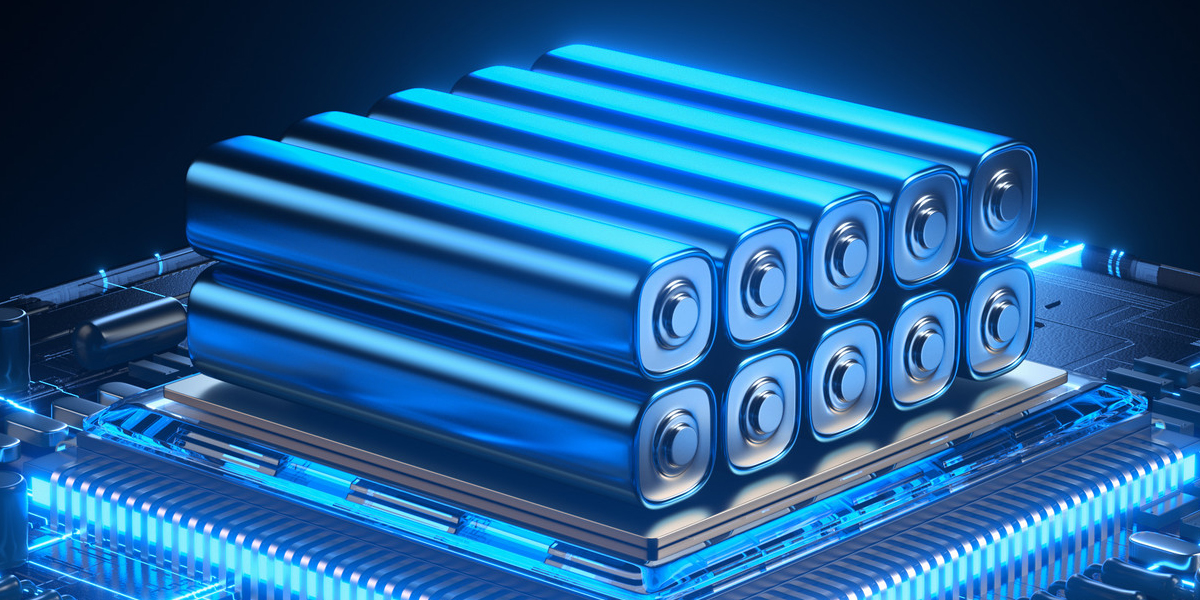
Battery IndustryCathode slurries, anode slurries, electrolyte additives, separator coating liquids, battery adhesives |

Comprehensive Equipment Operation Demo Video
Intuitive, clear and dynamic experience of the technical advantages of synchronous defoaming by planetary centrifugal force and high negative pressure.
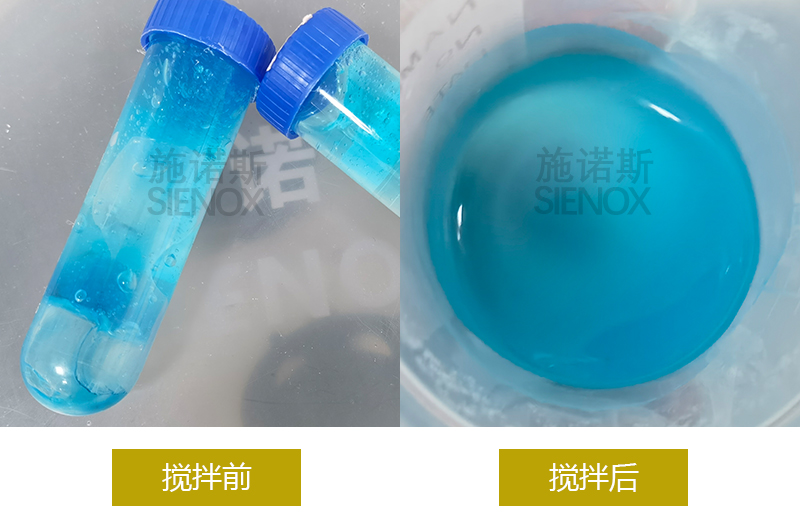
Actual Test Results of Defoaming Process
Actual Treatment Performance of Six Typical Materials
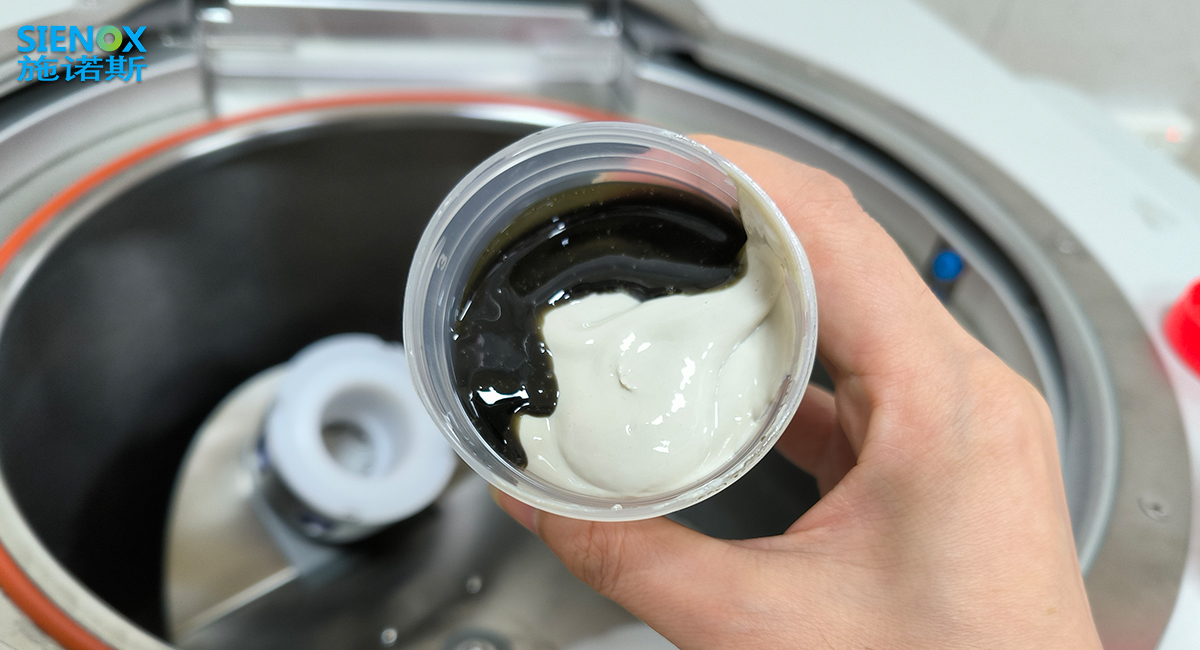
Gel |
Ink |
Silver Paste |
Silicone |
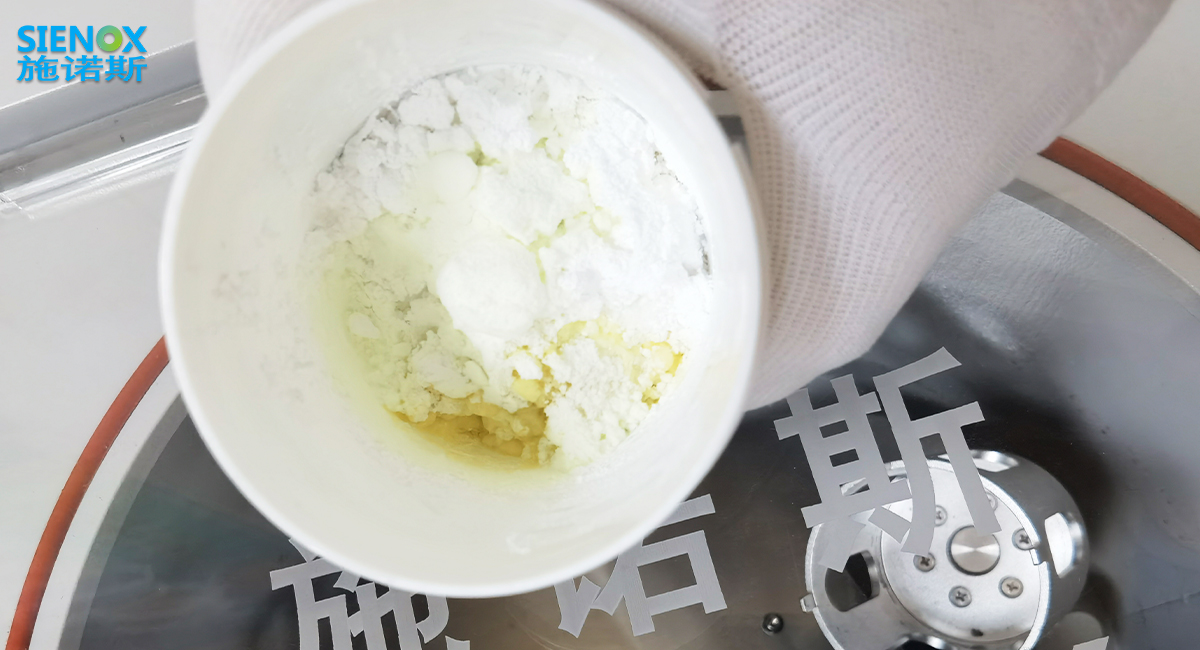
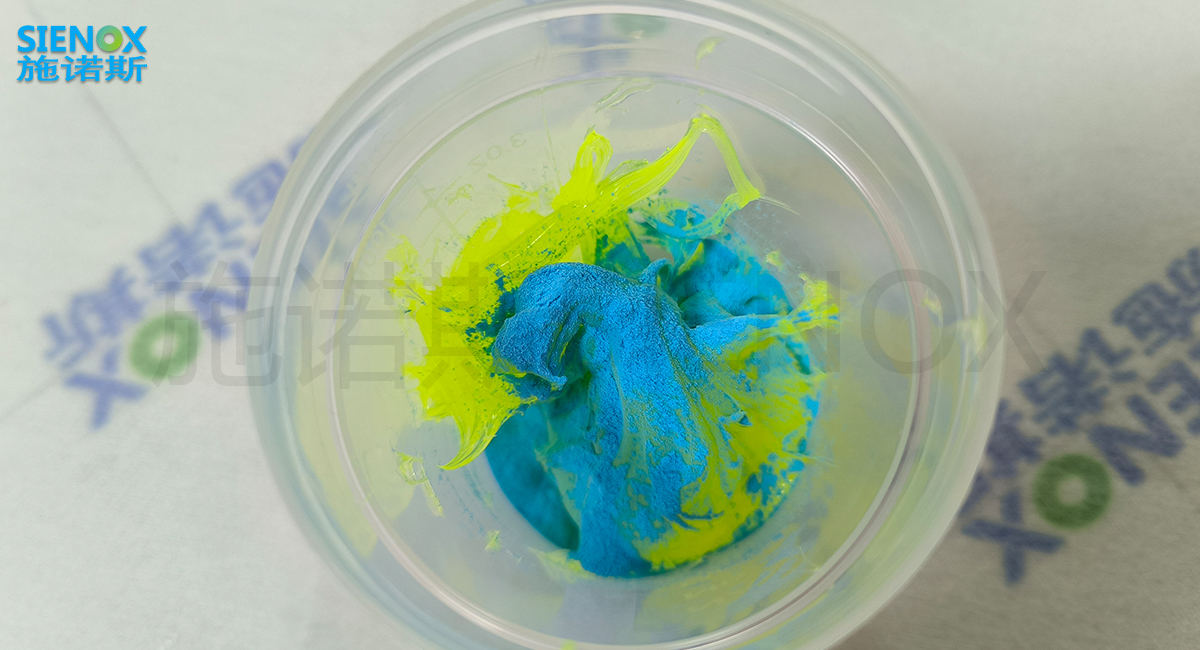
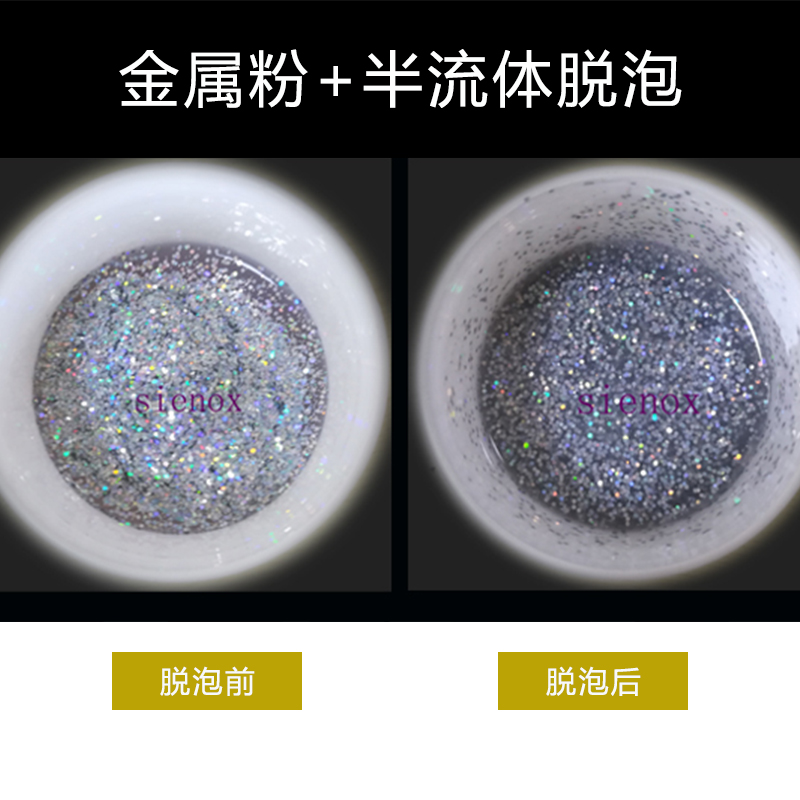
Electronic Adhesive + Powder |
Glass Powder |
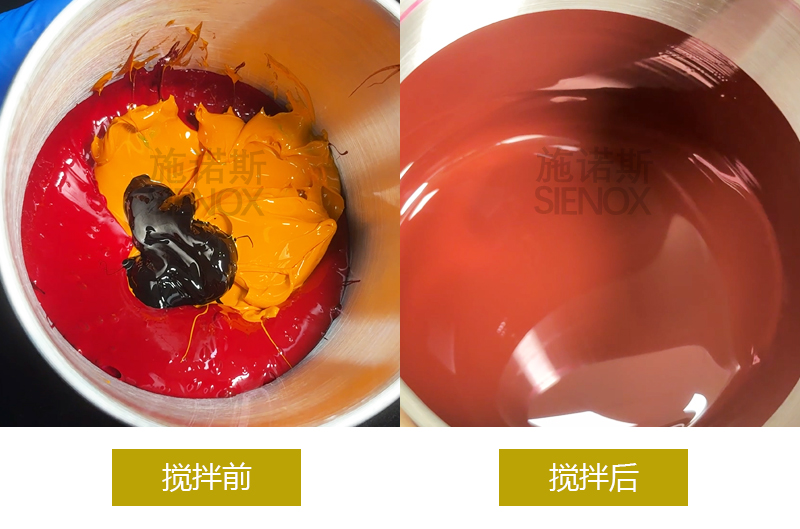
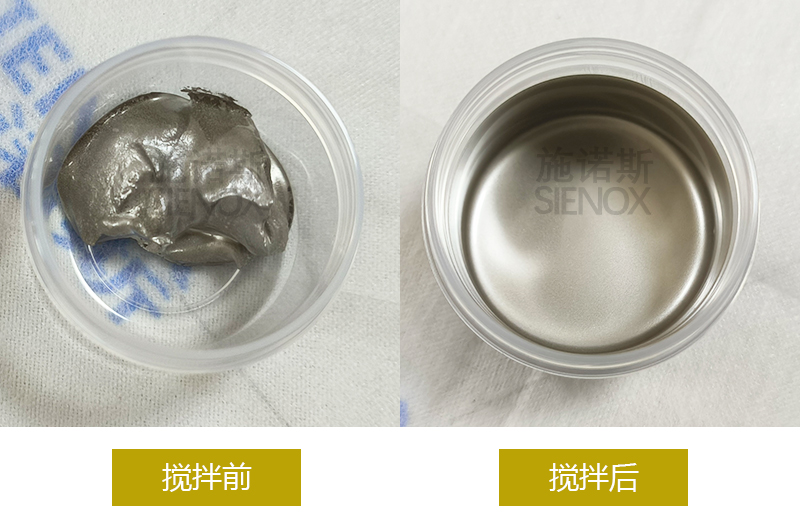
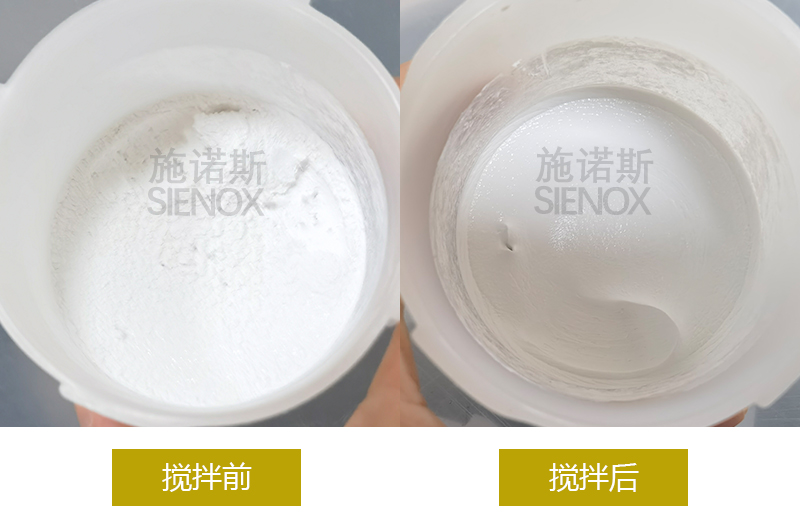
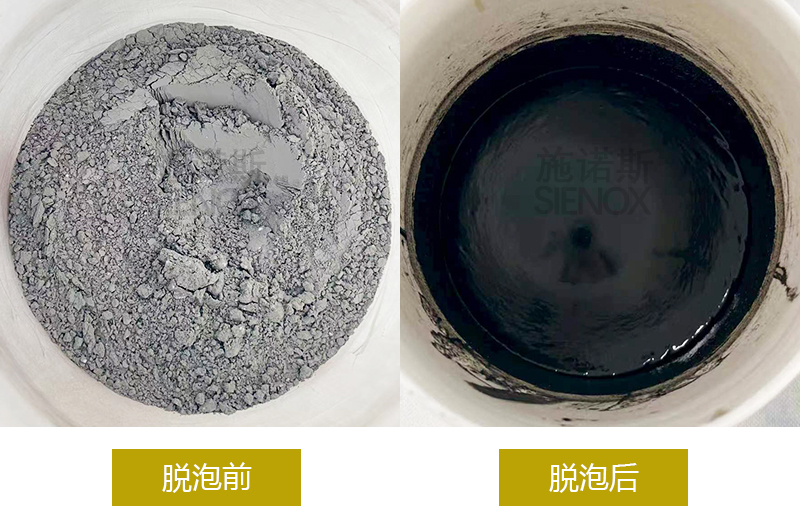
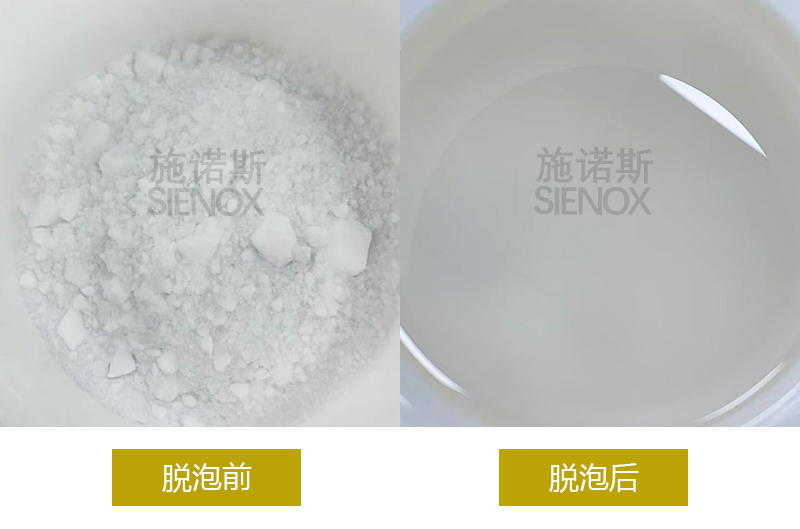
Measured Data Comparison
Three Representative Materials Before‑After Defoaming Comparison
Material Type | Condition Before Treatment | After MIX80 Treatment |
Silicone Gel | Dense internal bubbles, low transparency, tensile strength deviation ±20% | Bubbles eliminated, improved transparency, tensile strength deviation ±5% |
UV‑Curable Ink | Abundant internal bubbles, printing pinhole rate approx. 8%, large color deviation | Bubbles eliminated, printing pinhole rate <1%, consistent color |
Conductive Silver Adhesive | Obvious silver‑powder agglomeration, numerous internal bubbles, volatile volume resistivity | Uniform silver‑powder dispersion, bubbles eliminated, stable volume resistivity |
* Internal laboratory test data. Actual improvement varies with material formulation. Real customer cases are available upon request from sales.
Customer Delivery & Application Cases
Rooted in manufacturing frontlines, empowering benchmark production lines and key national research institutions across diverse industries.
Stirring & Defoaming Solution for Powders and Fluids |
AB Structural Adhesive Mixing & Defoaming Solution |
Mixing and Defoaming Solution for High‑Viscosity Colloid and Phosphor Powder Materials |